 EN
Home Skincare
Ideal for daily facial care routines, providing easy-to-use beauty solutions at home.

2026/10/24
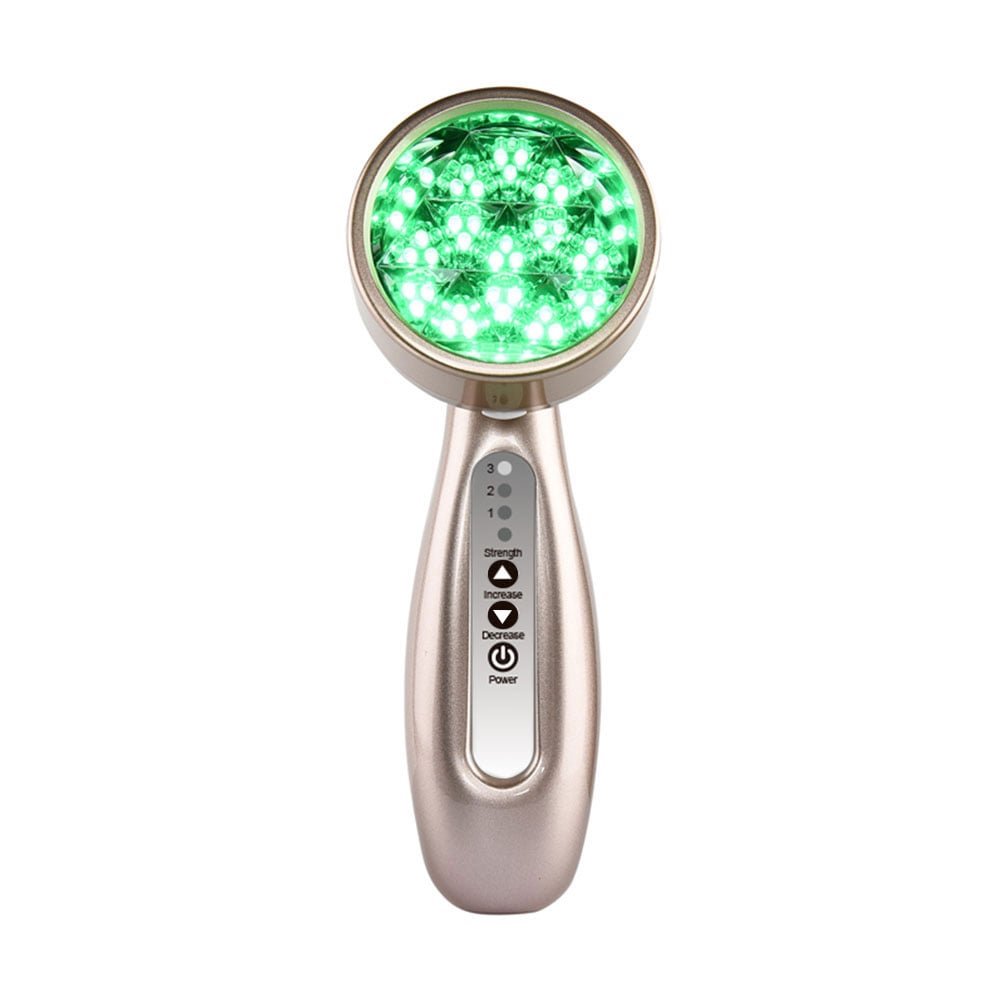
For a brand buyer, choosing a Beauty equipment producer is not simply a matter of comparing a sample’s appearance or a quotation. A polished prototype can hide weak controls upstream, while a dependable supplier can explain how parts, assembly, testing, and corrective action connect. That difference matters when a device moves from a small evaluation order to repeat production.
From a procurement-risk perspective, the useful question is not “Does this supplier say it values quality?” It is “What evidence can this Beauty equipment producer show for each production batch?” The five processes below give buyers a practical framework for asking that question. They are not a substitute for product-specific compliance review, but they make factory conversations more concrete. In an evaluation, the term Beauty equipment producer should mean a supplier that can connect its promise to documented control points, not merely a factory with an attractive sample room.
The first control point starts before assembly. A capable Beauty equipment producer should identify which incoming items are critical to safety, fit, performance, and cosmetic finish. Depending on the device, that may include housings, cables, batteries, LEDs, heating elements, circuit boards, fasteners, labels, or packaging materials.
Incoming inspection does not need to mean checking every characteristic on every delivery. It should mean having a documented way to verify the right things: part identity, visible condition, key dimensions, supplier documentation where relevant, and selected functional or electrical checks. For electronics, handling and packaging controls can be just as important as the part itself. Accepting components only on the basis of a supplier’s packing list leaves too much uncertainty for the next stage.
Ask to see an incoming-inspection record, a clear acceptance rule, and what happens when a shipment fails. This is a useful early test of whether a Beauty equipment producer has defined gates or relies on informal judgement. The useful answer includes segregation, disposition, and feedback to the supplier—not merely “our staff will be more careful next time.”
Once a line begins, the first completed unit is a checkpoint, not a ceremonial sample. The production team compares that unit with the approved specification before the full batch is built. This is where assembly sequence, wire routing, fit, cosmetic alignment, labels, software version, and key functional settings can be caught before variation spreads.
Look for current work instructions at the station and a revision-control method that prevents an old drawing or outdated bill of materials from reappearing. In practice, quality failures often come from a small process change that was communicated informally. Controlled instructions make the expected build visible to operators, supervisors, and auditors.
There is an important boundary here: a first-piece check cannot prove that every later unit is correct. Even a well-organized Beauty equipment producer needs follow-on process checks to maintain that starting condition. Its job is to establish a verified starting condition. The next process must show how that condition is maintained.
Good quality control is not a final inspection department trying to rescue an entire order. Practical production control places checks at the moments when a mistake becomes hard to reverse: after subassembly, after electrical connection, after sealing or fastening, and before final cosmetic completion.
These checks may include visual workmanship review, torque or fit confirmation, continuity checks, temperature or output verification where applicable, and checks that the unit matches the approved configuration. The exact tests should follow the device design; buyers should be cautious of factories that promise one generic test list for every beauty tool. A credible Beauty equipment producer will explain why a check belongs at that station and what decision it supports.
A useful sign is traceability. The factory should be able to connect a finding to a workstation, date, batch, and corrective action. That turns an isolated defect into information the team can use. Without that link, a factory may detect a problem but still struggle to prevent it from recurring.
Final inspection verifies that the finished product is ready to release under its defined requirements. For an electronics-and-beauty-device manufacturer, this normally combines appearance review, functional testing, packaging checks, and product-specific safety-related checks. A device may look flawless while a switch, charging connection, light source, control, or protective feature does not operate as intended.
Ask how test equipment is identified and whether its suitability is periodically checked or calibrated when measurement traceability matters. The point is not to demand a named certification without context. It is to understand whether the result comes from a controlled measurement process or from an unrecorded judgement call. A serious manufacturer can usually explain the test purpose, pass/fail decision, record format, and response to failure in plain language.
Final release should also keep defective and approved units clearly separated. This separation is a basic discipline a Beauty equipment producer should be able to demonstrate during a process review. If reworked products are permitted back into the flow, their reinspection should be explicit. That reduces the chance that a visually repaired unit bypasses the test that originally failed.
No manufacturing system prevents every nonconformance. What distinguishes a mature supplier is what happens after one is found. The process should record the issue, contain affected material, investigate the likely cause, define a corrective action, and verify whether the action actually worked.
For buyers, this is often the most revealing process to discuss. If a pre-shipment inspection finds inconsistent assembly, a capable factory should be able to describe the batch scope, the containment decision, the rework or replacement approach, and the prevention step for future production. “We fixed it” is not a closed loop; a documented cause-and-effect record is much more useful. This is where a Beauty equipment producer turns a complaint or inspection finding into a controlled learning event.
Trend review matters too. Repeated cosmetic defects, intermittent electrical failures, or recurring packaging damage may each look minor in isolation. Over several batches, they can reveal a supplier-control, fixture, training, or design-for-manufacture problem. A team that reviews patterns has a better chance of improving reliability rather than only sorting defects.
Before selecting a manufacturer, request representative—not confidential—examples of an incoming check, first-piece signoff, in-process record, final test record, and corrective-action report. Then compare what the documents say with what the factory team can explain. The strongest Beauty equipment producer will show that the same process is understood by quality staff, line leaders, and sourcing contacts. Consistency between the process, the records, and the production floor is more meaningful than a long list of promises.
Quality is rarely created by one final test. It is built through connected decisions, from component receipt to batch release and feedback. When a supplier can demonstrate these five controls with clear records and sensible boundaries, a buyer has a stronger basis for evaluating repeatability, communication, and long-term production readiness.

2026/10/30
Discover why in-house mold development helps an RF beauty device manufacturer improve product consistency, iteration speed, tooling control, and production readiness.

2026/10/30
Learn how to verify an RF beauty device manufacturer's R&D and prototyping capabilities using practical engineering workflows and audit checklists.

2026/10/30
Learn what shapes MOQ when choosing an RF beauty device manufacturer and how to plan a lower-risk first order with balanced platform and customization.

2026/10/30
Use this RF beauty device manufacturer evaluation checklist to compare safety evidence, OEM and ODM capability, quality control, and launch readiness.

2026/10/30
See how technology makes beauty at home more guided, consistent, and informed—plus a practical checklist for choosing devices wisely.

2026/10/30
Explore how AI and smart devices shape the future of beauty with responsive routines, clear guidance, trustworthy design, and user-controlled care.

Ideal for daily facial care routines, providing easy-to-use beauty solutions at home.

Perfect for spas and salons’ frequent treatments, enhancing client experiences and results.

Supports dermatologists with advanced devices for professional skin therapy sessions.

Delivers innovative solutions for full-body massage and relaxation with home devices.

Features anti-aging technologies to help reduce wrinkles and stimulate skin vitality.

Specialized devices for safe and effective hair removal suitable for home or clinic use.

Our customers love the Perfect Idea beauty devices. Quality, packaging, and results are all outstanding. We saw increased repeat sales after adding their facial cleansers to our lineup. Their support team is responsive and reliable.

Perfect Idea brings innovation and reliability to home beauty appliances. Our collaboration introduced their massage tools to Japanese women, boosting customer satisfaction and growing our brand trust across the region.

We partnered with Shenzhen Perfect Idea Tech for their beauty equipment. The shipping was fast and every product matched our expectations. Their home-use massagers are especially popular with local salons and home users.

The stylish packaging and attractive design make Perfect Idea stand out. French consumers appreciate the easy instructions and visible results. Communication was efficient and orders always arrived on time.

Perfect Idea home use personal care devices have become a favorite with our clients. The beauty device line offers quality at a reasonable price, and technical training for our staff made onboarding easy.

We selected Perfect Idea for our beauty product portfolio and have seen very positive feedback from our customers. Products are easy to market online and the customer support is reliable and helpful.
