 EN
Home Skincare
Ideal for daily facial care routines, providing easy-to-use beauty solutions at home.

2026/10/25
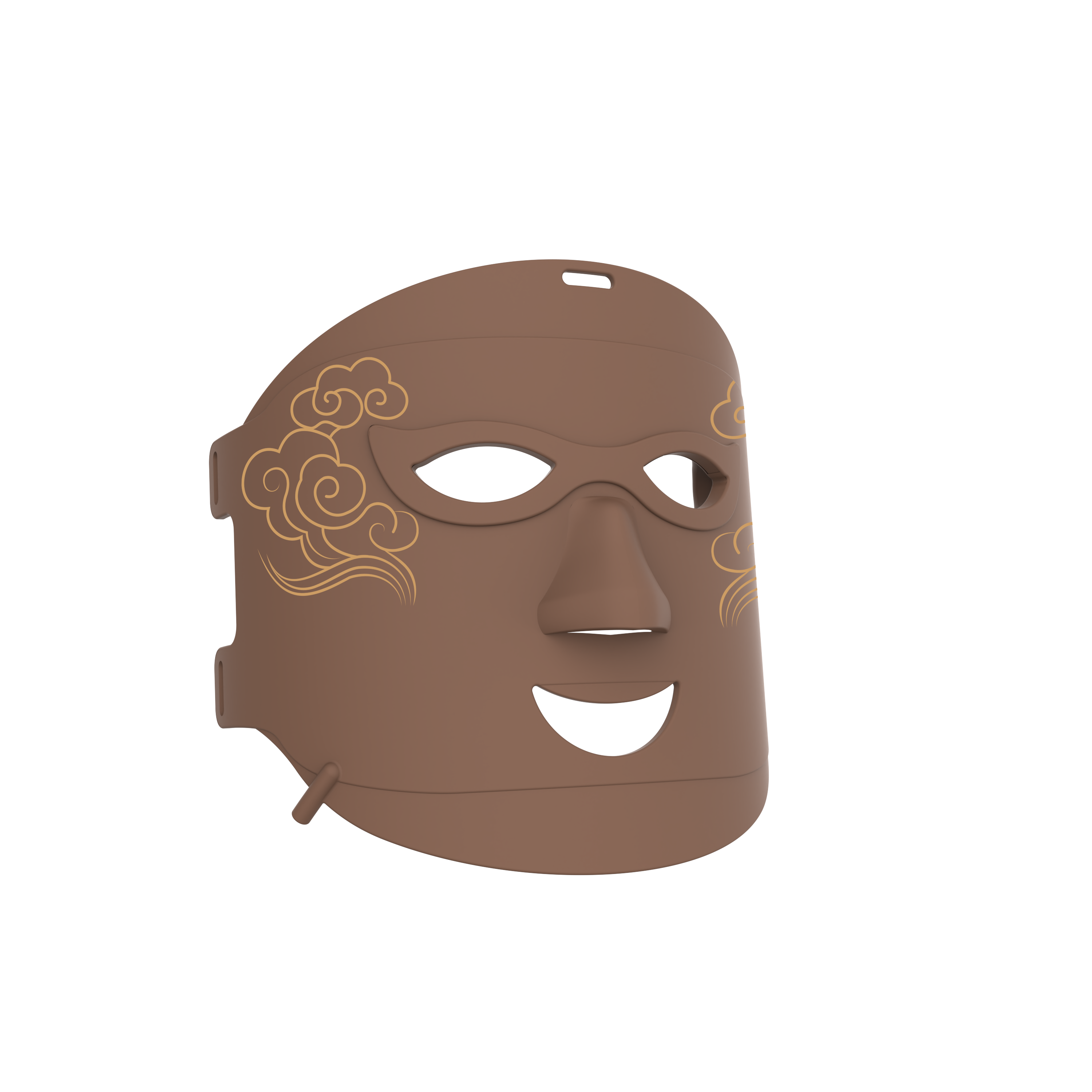
For a flexible LED facial device, choosing a silicone mask is not simply a choice between a soft option and a firm option. The useful comparison is usually between liquid silicone rubber (LSR) and high-consistency, or solid, silicone rubber (HCR). Both can become durable elastomer parts after curing. Yet their starting form, molding route, tolerance behavior, and validation priorities are different enough to affect the comfort, repeatability, and commercial risk of a finished silicone mask.
From a brand-development viewpoint, start with the intended product experience and production plan rather than with a generic material preference. A material that looks ideal in a sample plaque may be the wrong choice for a thin eye contour, an embedded component, or a low-volume launch. The right silicone mask is the one whose material, geometry, tooling, cure process, and finished-part tests work together.
LSR is generally a low-viscosity, two-part silicone elastomer metered and mixed before it enters a heated mold. It is commonly associated with injection molding. HCR begins as a high-viscosity, gum-like compound and is commonly compression molded, transfer molded, calendered, or extruded before curing. Neither label alone proves that a silicone mask is safer, softer, or more premium.
Formulation matters. Pigments, hardness, filler level, cure chemistry, post-cure conditions, wall thickness, and mold design can all change how a finished silicone mask feels and performs. For that reason, treat supplier claims about tear strength, recovery, or skin comfort as a starting point for sampling, not as a substitute for part-level validation.
LSR is often a strong candidate when the silicone mask needs consistent thin sections, repeated geometry, clean flash control, or automated high-volume production. A closed injection process can support repeatability when the tool, mixing system, and process window are well controlled. It can also suit designs where flexible silicone must be molded around an approved insert or interface, provided compatibility and assembly validation are planned early.
HCR can make sense when a project benefits from compression molding, sheet-based processing, a particular tactile target, or an early production scale that does not justify dedicated high-output injection tooling. Its higher viscosity changes how material fills the tool, so the mold layout, venting, trimming plan, and operator controls deserve close attention. A solid-silicone mask is not automatically less flexible; the relevant result comes from the selected compound and the final geometry.
| Decision factor | LSR direction | HCR direction | Question to ask |
|---|---|---|---|
| Starting behavior | Low-viscosity material designed for controlled metering and injection | High-consistency, gum-like material handled through compression, transfer, or related routes | Which process matches the factory’s proven capability? |
| Fine geometry | Often suitable for controlled, repeatable thin or detailed features | Can work well, but fill, venting, and trimming need design attention | Where are the thinnest zones and stress concentrators? |
| Scale | Often favors repeatable, automated higher-volume output after tooling investment | Can offer useful flexibility for certain programs and process routes | What volume and change frequency are realistic? |
| Mechanical target | Evaluate elongation, recovery, and tear behavior on the finished part | Evaluate tensile behavior, compression set, and recovery on the finished part | What must the silicone mask withstand in actual use? |
| Visual finish | Tool surface and process control strongly affect appearance | Tooling, handling, and trimming control strongly affect appearance | Which cosmetic defects are unacceptable for the brand? |
The table is a selection aid, not a universal performance ranking. Published material comparisons often note that LSR and HCR differ in viscosity and common processing routes, while mechanical outcomes remain grade- and process-specific. A silicone mask should therefore be approved against its own dimensions, cure schedule, and use conditions.
Comfort is where material decisions become visible to the wearer. Map the facial-contact areas, eye and nose cutouts, strap attachment points, cable exits, and any rigid-to-soft transitions. Then define what “comfortable” means in measurable terms: acceptable edge feel, target fit range, recovery after removal, skin-contact finish, resistance to tearing at openings, and the ability to retain shape through the expected cleaning routine.
A very soft silicone mask can feel pleasant but may need more support in broad spans. A firmer material can hold geometry better but may create pressure if the pattern and edge design are not refined. Material hardness is only one variable; thickness gradients, rib placement, cutout shape, and strap load paths can make a larger difference than a small change in nominal durometer.
Before freezing the material, ask the manufacturer to review the complete part rather than a flat swatch. Discuss gates or charge locations, venting, parting lines, flash limits, trimming access, pigment dispersion, cure conditions, post-cure needs, and inspection points. For a silicone mask with electronics nearby, also review assembly sequence, ingress paths, and heat exposure. These details determine whether the selected elastomer can be made consistently at the desired appearance level.
For brands developing an LED silicone mask, a supplier with experience across home beauty-device productization can help connect the material decision to the broader system. That does not remove the need for documented verification; it makes early trade-offs easier to surface before tooling commitments become expensive.
Choose LSR for a silicone mask when high-volume repeatability, precise molded geometry, controlled thin features, or a well-defined automated molding route are central to the program. The investment may be justified when the design is stable and the production forecast supports it. Confirm that the selected grade produces the required feel and durability after curing, not merely that it is marketed as liquid silicone.
Choose HCR when compression-oriented processing, a specific compound behavior, or a more flexible manufacturing route aligns better with the product brief and supplier capability. It can be a sound choice for a silicone mask when the design is engineered for its flow and finishing requirements. Ask for evidence from controlled samples, including how edges, openings, and cosmetic surfaces are managed at production speed.
There is no universal winner between liquid and solid silicone for a silicone mask. LSR is often selected for controlled injection molding and repeatable detailed geometry; HCR is often selected where its compound behavior and compression-oriented processing fit the project. Make the decision with a finished-part sample plan, not with a material name alone. The most reliable launch path is to define the wear experience, review manufacturability, test the actual geometry, and approve the complete material-and-process combination before production tooling is released.

2026/10/30
Discover why in-house mold development helps an RF beauty device manufacturer improve product consistency, iteration speed, tooling control, and production readiness.

2026/10/30
Learn how to verify an RF beauty device manufacturer's R&D and prototyping capabilities using practical engineering workflows and audit checklists.

2026/10/30
Learn what shapes MOQ when choosing an RF beauty device manufacturer and how to plan a lower-risk first order with balanced platform and customization.

2026/10/30
Use this RF beauty device manufacturer evaluation checklist to compare safety evidence, OEM and ODM capability, quality control, and launch readiness.

2026/10/30
See how technology makes beauty at home more guided, consistent, and informed—plus a practical checklist for choosing devices wisely.

2026/10/30
Explore how AI and smart devices shape the future of beauty with responsive routines, clear guidance, trustworthy design, and user-controlled care.

Ideal for daily facial care routines, providing easy-to-use beauty solutions at home.

Perfect for spas and salons’ frequent treatments, enhancing client experiences and results.

Supports dermatologists with advanced devices for professional skin therapy sessions.

Delivers innovative solutions for full-body massage and relaxation with home devices.

Features anti-aging technologies to help reduce wrinkles and stimulate skin vitality.

Specialized devices for safe and effective hair removal suitable for home or clinic use.

Our customers love the Perfect Idea beauty devices. Quality, packaging, and results are all outstanding. We saw increased repeat sales after adding their facial cleansers to our lineup. Their support team is responsive and reliable.

Perfect Idea brings innovation and reliability to home beauty appliances. Our collaboration introduced their massage tools to Japanese women, boosting customer satisfaction and growing our brand trust across the region.

We partnered with Shenzhen Perfect Idea Tech for their beauty equipment. The shipping was fast and every product matched our expectations. Their home-use massagers are especially popular with local salons and home users.

The stylish packaging and attractive design make Perfect Idea stand out. French consumers appreciate the easy instructions and visible results. Communication was efficient and orders always arrived on time.

Perfect Idea home use personal care devices have become a favorite with our clients. The beauty device line offers quality at a reasonable price, and technical training for our staff made onboarding easy.

We selected Perfect Idea for our beauty product portfolio and have seen very positive feedback from our customers. Products are easy to market online and the customer support is reliable and helpful.
