 EN
Home Skincare
Ideal for daily facial care routines, providing easy-to-use beauty solutions at home.

2026/10/24
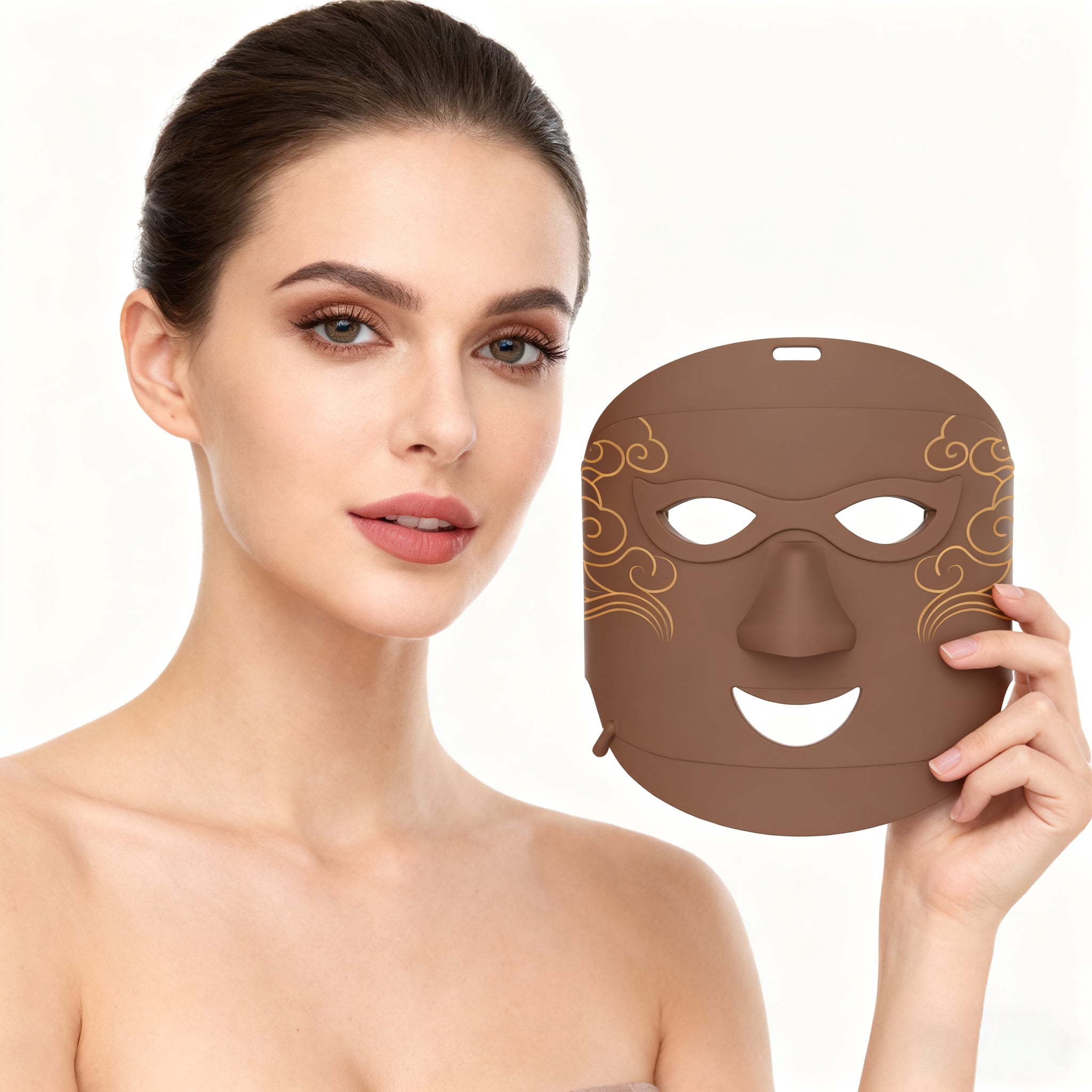
A red light therapy mask is not just a light source shaped like a face. It is a wearable device, so the housing material influences whether people can position it comfortably, follow a routine, clean it sensibly, and store it between sessions. That is why flexible silicone has become a common choice for many face-hugging designs. It can address practical wearing problems that a rigid shell may not solve as easily.
When reviewing home beauty devices, it helps to separate this question into two parts. First, does the material help the mask sit comfortably and consistently? Second, has the complete red light therapy mask been engineered, tested, and labeled appropriately for its intended use? Silicone can support the first goal. It does not, by itself, prove the second.
Faces are not flat and they are not identical. Forehead width, cheekbone prominence, nose shape, and jawline all vary. A flexible silicone mask can bend around those contours instead of asking the user to fit their face to a fixed shell. In practice, that often reduces pressure points around the bridge of the nose, temples, and upper cheeks.
For a red light therapy mask, close and repeatable placement is useful because it makes the experience less distracting. The goal is not to promise identical light delivery on every face—optical geometry, LED layout, straps, and fit still matter. Rather, a conforming material gives the design team a better starting point for keeping the mask in a stable, wearable position.
There is an important boundary here: a rigid mask can maintain a fixed distance from the face, which some optical designs may prefer. Silicone is preferred when comfort and adaptable facial fit are higher priorities; it is not automatically the most suitable answer for every LED configuration.
At first, it is easy to focus on the LED count or light colors. But a device that can be worn comfortably is usually more useful than one with an impressive specification sheet that ends up in a drawer. A soft silicone red light therapy mask generally feels less imposing than a hard, molded shell and can be easier to wear while reclining or moving gently around the home.
Comfort is also a design-system issue. The material works with the strap layout, edge thickness, eye-area geometry, cable routing, and controller weight. If any of those elements are poorly resolved, silicone alone will not fix the experience. But its flexibility gives product designers room to soften contact zones and distribute pressure rather than concentrating it at a few rigid edges.
Silicone can support a thin, flexible construction. That can reduce the perceived bulk of a red light therapy mask and make it easier to fold or lay flat for travel and storage. For brands selling to consumers who expect a device to fit into a self-care routine, portability is not a superficial benefit. A compact product is more likely to be put away safely and brought out again.
Material selection should still be evaluated alongside the internal architecture. The finished device needs protected electronics, secure LED mounting, reliable strain relief where cables or battery assemblies connect, and a shape that returns to its intended position after normal handling. A flexible exterior should not be used to hide weak structural design.
When a mask touches skin, surface feel matters. Silicone can be formulated and finished to create a smooth, non-abrasive contact surface, which is one reason it is frequently considered for wearable beauty devices. For a brand team, the practical question goes beyond “Is it silicone?” to the grade, finish, pigment system, thickness, and manufacturing controls specified for skin contact.
That distinction matters because the word silicone covers a broad family of materials. A sourcing brief should ask for documentation that matches the intended market and use case, as well as sample-based evaluation for odor, tackiness, tear resistance, color stability, and cleanability. Claims such as “medical grade” should be used only where the supplier can substantiate them; they should not be treated as a marketing shortcut.
Light-therapy devices need straightforward care instructions. A silicone surface can be wiped according to the manufacturer’s directions, and a one-piece flexible form may reduce deep grooves where skincare residue could collect. Still, the mask is an electronic product, not a washable accessory. Users should not soak it, use harsh solvents, or ignore the instructions around the controller, charging points, and LED areas.
For product developers, hygiene is a whole-design responsibility. Evaluate how the material joins to lenses, LED boards, straps, and any rigid support pieces. Smooth transitions, durable seals, and clear cleaning guidance often matter more to long-term usability than the material label alone.
A silicone red light therapy mask is not automatically safer, more effective, or better made than a hard-shell alternative. Material comfort does not verify wavelength output, irradiance, treatment timing, eye-safety design, electrical safety, or regulatory status. Those questions require device-level evidence and market-specific review.
Consumers should use a red light therapy mask only as directed and should pay attention to warnings related to eye exposure, photosensitivity, medications, or existing skin concerns. Brands should keep performance claims within the evidence they can support. That approach is more credible than treating flexibility as proof of a treatment outcome.
Silicone is often preferred for a red light therapy mask because it can conform to facial contours, reduce the sense of bulk, and support a more comfortable everyday wearing experience. Those advantages can encourage consistent, sensible use and give brands useful freedom in fit-focused product design.
The better decision is not “silicone versus rigid” in isolation. It is choosing the material and device architecture that match the intended user, light-delivery design, validation plan, and care routine. When flexibility, comfort, and portability are central to the brief, silicone is a strong option. When a fixed optical distance or a more structured housing is critical, a rigid design may be appropriate instead.

2026/10/30
Discover why in-house mold development helps an RF beauty device manufacturer improve product consistency, iteration speed, tooling control, and production readiness.

2026/10/30
Learn how to verify an RF beauty device manufacturer's R&D and prototyping capabilities using practical engineering workflows and audit checklists.

2026/10/30
Learn what shapes MOQ when choosing an RF beauty device manufacturer and how to plan a lower-risk first order with balanced platform and customization.

2026/10/30
Use this RF beauty device manufacturer evaluation checklist to compare safety evidence, OEM and ODM capability, quality control, and launch readiness.

2026/10/30
See how technology makes beauty at home more guided, consistent, and informed—plus a practical checklist for choosing devices wisely.

2026/10/30
Explore how AI and smart devices shape the future of beauty with responsive routines, clear guidance, trustworthy design, and user-controlled care.

Ideal for daily facial care routines, providing easy-to-use beauty solutions at home.

Perfect for spas and salons’ frequent treatments, enhancing client experiences and results.

Supports dermatologists with advanced devices for professional skin therapy sessions.

Delivers innovative solutions for full-body massage and relaxation with home devices.

Features anti-aging technologies to help reduce wrinkles and stimulate skin vitality.

Specialized devices for safe and effective hair removal suitable for home or clinic use.

Our customers love the Perfect Idea beauty devices. Quality, packaging, and results are all outstanding. We saw increased repeat sales after adding their facial cleansers to our lineup. Their support team is responsive and reliable.

Perfect Idea brings innovation and reliability to home beauty appliances. Our collaboration introduced their massage tools to Japanese women, boosting customer satisfaction and growing our brand trust across the region.

We partnered with Shenzhen Perfect Idea Tech for their beauty equipment. The shipping was fast and every product matched our expectations. Their home-use massagers are especially popular with local salons and home users.

The stylish packaging and attractive design make Perfect Idea stand out. French consumers appreciate the easy instructions and visible results. Communication was efficient and orders always arrived on time.

Perfect Idea home use personal care devices have become a favorite with our clients. The beauty device line offers quality at a reasonable price, and technical training for our staff made onboarding easy.

We selected Perfect Idea for our beauty product portfolio and have seen very positive feedback from our customers. Products are easy to market online and the customer support is reliable and helpful.
