 EN
Home Skincare
Ideal for daily facial care routines, providing easy-to-use beauty solutions at home.

2026/10/30

Technology has moved beauty at home beyond a shelf of creams and a once-in-a-while facial. A connected tool, a timed light session, or a guided cleansing routine can turn a vague goal—brighter-looking skin, a calmer routine, better consistency—into a repeatable ritual. That shift is useful, but it also changes what thoughtful beauty decisions look like. The question is no longer simply “What should I buy?” It is “What does this tool do, what can it reasonably support, and will I use it well enough for it to belong in my routine?”
As an observer of home beauty-device trends, I see the most meaningful change in the way people evaluate their routines. The most useful technology does not replace basic skin care, sleep, sun protection, or professional advice when it is needed. It can make a routine more deliberate by adding timing, feedback, consistency, and a clearer match between a goal and a method.
Traditional at-home beauty often depended on memory and mood: use a mask when skin feels dull, try a new serum after seeing it online, or book a treatment when there is time. Home technology introduces structure. Timers can limit a session to its intended duration. Preset modes can reduce guesswork. Rechargeable or app-connected tools can make it easier to follow a simple schedule rather than improvising every week.
This matters because consistency is usually more valuable than intensity for a home routine. An at home beauty treatment device should fit into ordinary life—next to an evening cleanse, during a short wind-down, or as part of a planned weekly reset. If it is difficult to charge, awkward to clean, or unclear to operate, the feature list will not rescue the experience.
Technology therefore changes beauty by making behavior part of the product. A good tool asks for the right amount of effort, gives clear instructions, and leaves room for users to notice how their skin responds over time.
A crowded category can make every device sound interchangeable. It is not. LED-based tools, microcurrent devices, heat-based tools, cleansing tools, and ultrasonic formats each invite different expectations. For instance, an LED device may be considered by someone building a routine around light-based skin care, while a microcurrent format is often positioned around temporary facial-toning or maintenance routines. The practical starting point is not the trendiest technology; it is the user’s main concern, tolerance, available time, and willingness to follow instructions.
That is why a home skincare tool should be judged by routine fit before novelty. Someone who can reliably spare ten quiet minutes a few evenings a week may value a hands-free format. Someone who dislikes multi-step routines may prefer a single-purpose tool with a simple timer. In both cases, the aim is more intentional beauty, not a more complicated bathroom counter.
At-home technology can make a routine feel more approachable when it gives users guardrails: when to use the device, which settings are appropriate, how to clean it, and when to stop. Those details are not small print. They are central to safe, realistic beauty use.
Regulatory language is worth reading carefully. FDA guidance on photobiomodulation devices discusses the testing, clinical evidence, and labeling that can support certain premarket submissions. Meanwhile, dermatologist guidance has noted that some red-light devices have been FDA-cleared for signs of skin aging at home, while more research is still needed to establish exactly how effective they are. In plain language, a clearance or a technology label is not a promise that every person will see the same outcome. It is a reason to inspect the exact device, its intended use, and its directions.
A beauty technology routine can also encourage useful observation. Instead of changing five products at once, a user can introduce one tool, follow the recommended schedule, and note comfort, ease of use, and whether the routine is sustainable. This is not clinical diagnosis, and consumer apps or sensors should not be treated as one. It is simply a calmer way to learn what is working for one’s own routine.
There is a helpful counterpoint here: more data is not automatically better. If an app creates anxiety, pushes users to chase daily scores, or encourages frequent switching, it may undermine the steady habits that make home beauty feel restorative. The most helpful feedback is actionable and modest.
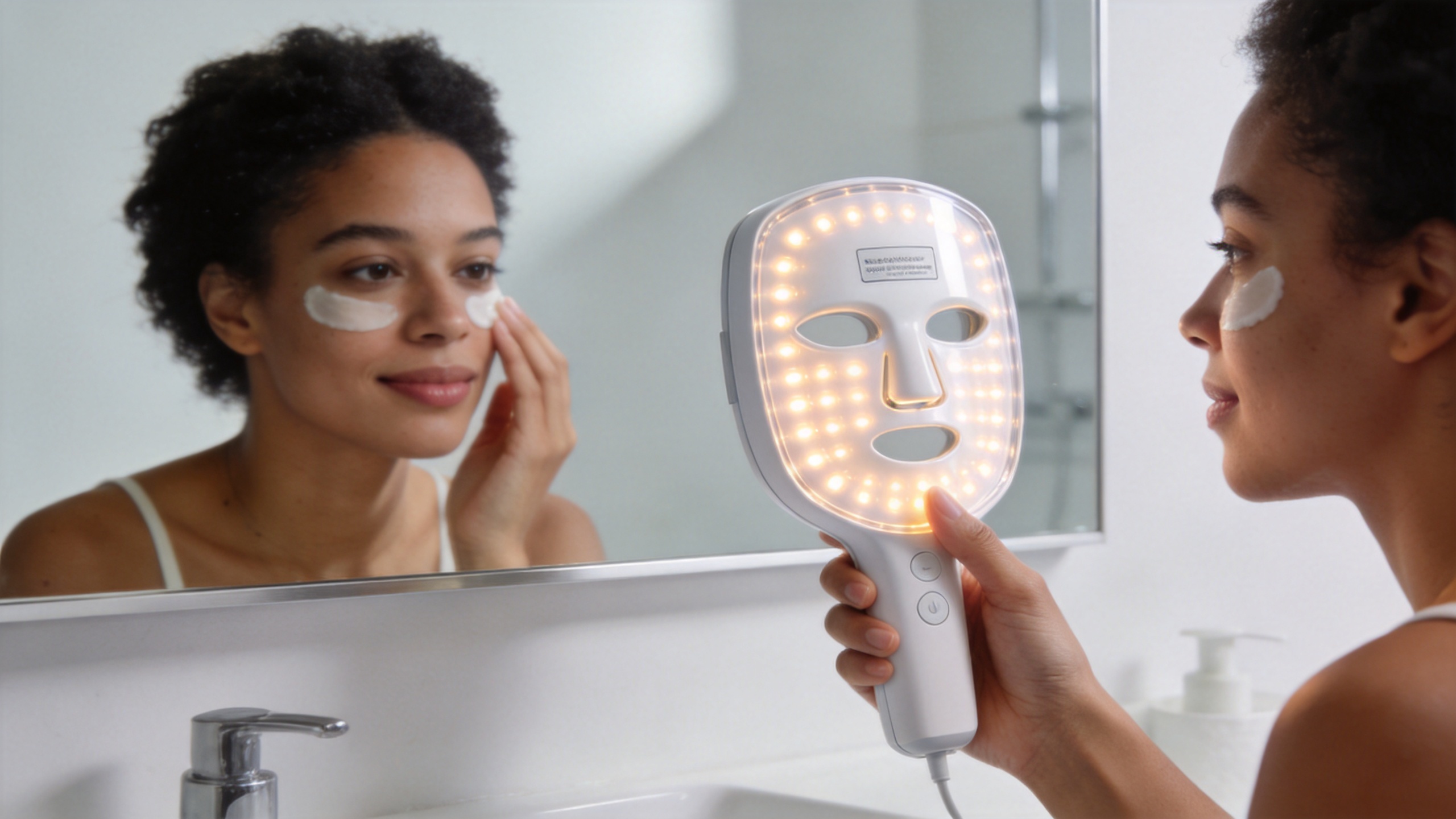
The strongest change technology brings to beauty is a shift from impulse to informed routine. A device can guide timing, reduce friction, and make a goal easier to revisit. It cannot guarantee transformation, diagnose skin, or make an unsuitable routine suitable. That distinction is more important than a glossy feature list.
For brands and product teams, this creates a higher standard too. Clear labeling, intuitive controls, realistic claims, dependable quality checks, and useful instructions matter as much as an eye-catching new mode. For users, the most modern approach to beauty at home is refreshingly simple: choose a tool for a defined purpose, use it as directed, keep the routine manageable, and let results be gradual rather than promised overnight.

2026/10/30
Discover why in-house mold development helps an RF beauty device manufacturer improve product consistency, iteration speed, tooling control, and production readiness.

2026/10/30
Learn how to verify an RF beauty device manufacturer's R&D and prototyping capabilities using practical engineering workflows and audit checklists.

2026/10/30
Learn what shapes MOQ when choosing an RF beauty device manufacturer and how to plan a lower-risk first order with balanced platform and customization.

2026/10/30
Use this RF beauty device manufacturer evaluation checklist to compare safety evidence, OEM and ODM capability, quality control, and launch readiness.

2026/10/30
Explore how AI and smart devices shape the future of beauty with responsive routines, clear guidance, trustworthy design, and user-controlled care.

Ideal for daily facial care routines, providing easy-to-use beauty solutions at home.

Perfect for spas and salons’ frequent treatments, enhancing client experiences and results.

Supports dermatologists with advanced devices for professional skin therapy sessions.

Delivers innovative solutions for full-body massage and relaxation with home devices.

Features anti-aging technologies to help reduce wrinkles and stimulate skin vitality.

Specialized devices for safe and effective hair removal suitable for home or clinic use.

Our customers love the Perfect Idea beauty devices. Quality, packaging, and results are all outstanding. We saw increased repeat sales after adding their facial cleansers to our lineup. Their support team is responsive and reliable.

Perfect Idea brings innovation and reliability to home beauty appliances. Our collaboration introduced their massage tools to Japanese women, boosting customer satisfaction and growing our brand trust across the region.

We partnered with Shenzhen Perfect Idea Tech for their beauty equipment. The shipping was fast and every product matched our expectations. Their home-use massagers are especially popular with local salons and home users.

The stylish packaging and attractive design make Perfect Idea stand out. French consumers appreciate the easy instructions and visible results. Communication was efficient and orders always arrived on time.

Perfect Idea home use personal care devices have become a favorite with our clients. The beauty device line offers quality at a reasonable price, and technical training for our staff made onboarding easy.

We selected Perfect Idea for our beauty product portfolio and have seen very positive feedback from our customers. Products are easy to market online and the customer support is reliable and helpful.
