 EN
Home Skincare
Ideal for daily facial care routines, providing easy-to-use beauty solutions at home.

2026/10/29
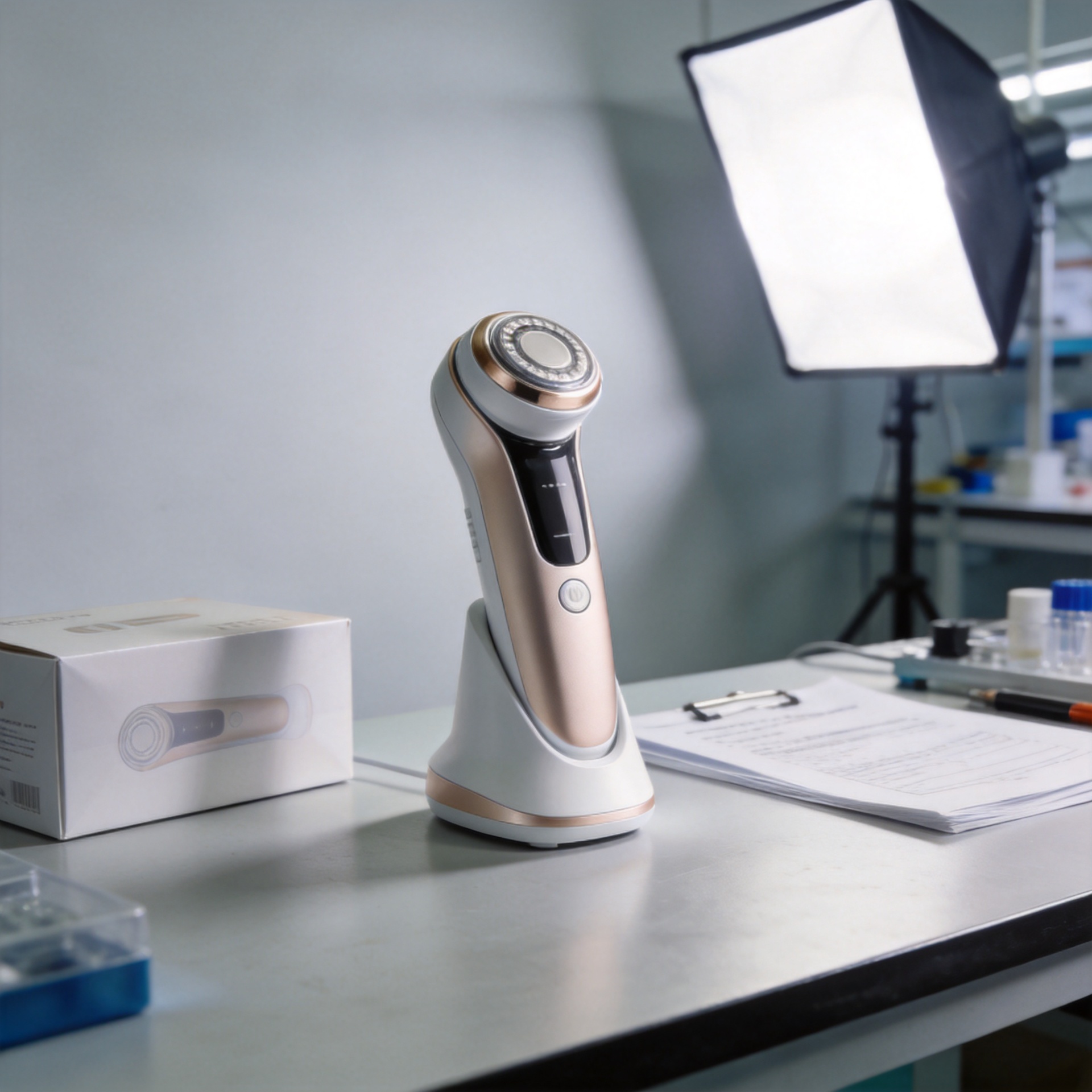
Launching a beauty device is not a matter of selecting a catalog beauty device model, adding a logo, and hoping the market responds. For an international brand buyer, the more useful question is whether every decision—from the user need to the final carton—supports a safe, repeatable beauty device, commercially credible product. A good beauty device program connects product definition, engineering, testing, claims review, production control, and launch materials before the first large purchase order is released.
This matters because home-use beauty devices sit at the intersection of skincare expectations and consumer-electronics execution. A function that sounds appealing in a presentation may create very different requirements for heat control, batteries, skin-contact materials, instructions, packaging, and market access. The roadmap below helps a brand turn an initial beauty device idea into a shelf-ready beauty device product without treating compliance and quality as last-minute tasks.
Begin by defining the person, routine, and outcome the device is meant to support. “For better skin” is too broad. A workable beauty brief identifies the intended user, use frequency, treatment area, environment, charging method, price positioning, and the boundaries of the desired claim. It also separates a consumer benefit from an engineering requirement. For example, a calm, easy-to-use home ritual may translate into ergonomic handling, clear indicators, manageable treatment duration, and instructions that discourage misuse.
At this stage, a brand should decide whether it needs an OEM adaptation of an established platform or a fuller ODM development path. OEM can be practical when the core beauty architecture is proven and differentiation is focused on color, branding, packaging, or a constrained configuration. ODM is more appropriate when a brand needs a different industrial design, feature set, user flow, or packaging system. the merchant profile describes the supplier’s ODM capability as covering function design, appearance customization, and packaging solutions; the important buyer task is to turn that capability into a documented scope, not an assumption.
Claims should shape the beauty device plan early. The U.S. FDA explains that medical-device classification is risk-based and depends on intended use and indications for use. That does not mean every home beauty product follows the same route, but it does mean a brand should obtain market-specific regulatory advice before it finalizes claims, labels, or technical specifications. In the EU, cosmetic claims are expected to be clear, truthful, and not misleading under the common-criteria framework. Device rules and cosmetic-claim rules may both be relevant depending on the beauty device and market.
Create a claims matrix that links every proposed beauty statement to evidence, user instructions, warnings, and the markets where it will appear. Avoid wording that implies diagnosis, treatment, or assured outcomes unless the applicable pathway and substantiation support the wording. This review protects more than a launch date: it prevents a late change in claims from invalidating packaging, artwork, marketing copy, or a product feature that was designed around an unsupported promise.
Once the brief is stable, the factory and brand should create a beauty device product requirements document. For a light-based beauty device, that might cover the intended light source arrangement, user controls, thermal behavior, fit, charging interface, and cleaning expectations. For microcurrent, RF, ultrasonic, or cold-hot concepts, it should define performance boundaries, contact surfaces, skin-safety considerations, and user safeguards without inventing performance claims.
Here is the practical correction many projects need: more beauty device functions do not automatically make a better beauty product. A focused daily-use function with understandable controls can be more valuable than a crowded specification that users cannot operate consistently. Ask for early samples or engineering prototypes that let the team assess grip, comfort, button logic, noise, charging behavior, and the clarity of the treatment routine. Record decisions and changes; undocumented verbal changes are a common source of mismatch between a sample and mass production.
A reliable beauty manufacturing schedule has gates, not just dates. After industrial design and engineering are agreed, review component choices, pilot builds, functional checks, cosmetic appearance, packaging fit, and user documentation. The exact tests depend on the technology and markets, but the control plan should make clear what is inspected on the beauty device, who approves it, and what happens when a result is outside the agreed limit.
For a beauty brand, sample approval should include more than appearance. Approve the reference sample, color standards, packaging dielines, labeling version, accessories, and the text of the user guide. If the beauty device has a rechargeable battery or electrical components, the shipping and market-entry documents should be discussed early with qualified compliance professionals and the relevant service providers.
The shelf-ready beauty device product includes the box, inserts, charging accessories, care guidance, and claim language. Packaging must protect the beauty device in transit, but it also sets expectations for the first use. A premium-looking carton cannot compensate for unclear contraindications or a confusing setup sequence. Make the unboxing path simple: identify the contents, tell the user how to charge and prepare the device, explain the routine in plain language, and make safety information easy to find.
It is sensible to test pack-out before mass production. Confirm that the beauty device, accessory trays, cable, manual, and outer carton fit as intended and that barcode, country-specific labels, and artwork versions are controlled. When a brand sells through both online and offline channels, the packaging team should also consider how the beauty device will be photographed, displayed, stored, and returned.
A shelf launch is smoother when the beauty device factory handoff is planned alongside manufacturing. Build a launch file containing approved beauty device product images, final specifications that are safe to share, care instructions, claim-approved copy, packaging artwork, and a clear contact path for quality questions. For a beauty device range, this file gives marketing, e-commerce, retail, and customer-service teams one controlled source of truth.
Before the purchase order is closed, hold a final cross-functional review. Check that the beauty device being shipped matches the approved sample, the selected market plan, and the written claims. Check production quantities, spare-part or service expectations, inspection records, and delivery documentation. If a trade-off is needed, make it visible. A lower unit cost can be reasonable, but only if it does not compromise the quality controls, user clarity, or market readiness that the brand depends on.
The strongest beauty device launch is not defined by a single feature. It is defined by disciplined connections: consumer insight to product brief, claim to evidence, engineering to safety controls, sample to production standard, and packaging to real-world use. Brands that establish those links early gain a clearer basis for choosing an OEM or ODM partner and for approving each gate with confidence.
Use this checklist in supplier discussions: Is the target user clear? Are intended claims reviewed for every market? Is the beauty device specification documented? Have pilot and pre-shipment gates been agreed? Are packaging, instructions, and launch assets version-controlled? When the answers are documented rather than assumed, the path from concept to shelf becomes more manageable and more resilient.

2026/10/30
Discover why in-house mold development helps an RF beauty device manufacturer improve product consistency, iteration speed, tooling control, and production readiness.

2026/10/30
Learn how to verify an RF beauty device manufacturer's R&D and prototyping capabilities using practical engineering workflows and audit checklists.

2026/10/30
Learn what shapes MOQ when choosing an RF beauty device manufacturer and how to plan a lower-risk first order with balanced platform and customization.

2026/10/30
Use this RF beauty device manufacturer evaluation checklist to compare safety evidence, OEM and ODM capability, quality control, and launch readiness.

2026/10/30
See how technology makes beauty at home more guided, consistent, and informed—plus a practical checklist for choosing devices wisely.

2026/10/30
Explore how AI and smart devices shape the future of beauty with responsive routines, clear guidance, trustworthy design, and user-controlled care.

Ideal for daily facial care routines, providing easy-to-use beauty solutions at home.

Perfect for spas and salons’ frequent treatments, enhancing client experiences and results.

Supports dermatologists with advanced devices for professional skin therapy sessions.

Delivers innovative solutions for full-body massage and relaxation with home devices.

Features anti-aging technologies to help reduce wrinkles and stimulate skin vitality.

Specialized devices for safe and effective hair removal suitable for home or clinic use.

Our customers love the Perfect Idea beauty devices. Quality, packaging, and results are all outstanding. We saw increased repeat sales after adding their facial cleansers to our lineup. Their support team is responsive and reliable.

Perfect Idea brings innovation and reliability to home beauty appliances. Our collaboration introduced their massage tools to Japanese women, boosting customer satisfaction and growing our brand trust across the region.

We partnered with Shenzhen Perfect Idea Tech for their beauty equipment. The shipping was fast and every product matched our expectations. Their home-use massagers are especially popular with local salons and home users.

The stylish packaging and attractive design make Perfect Idea stand out. French consumers appreciate the easy instructions and visible results. Communication was efficient and orders always arrived on time.

Perfect Idea home use personal care devices have become a favorite with our clients. The beauty device line offers quality at a reasonable price, and technical training for our staff made onboarding easy.

We selected Perfect Idea for our beauty product portfolio and have seen very positive feedback from our customers. Products are easy to market online and the customer support is reliable and helpful.
