 EN
Home Skincare
Ideal for daily facial care routines, providing easy-to-use beauty solutions at home.

2026/10/05
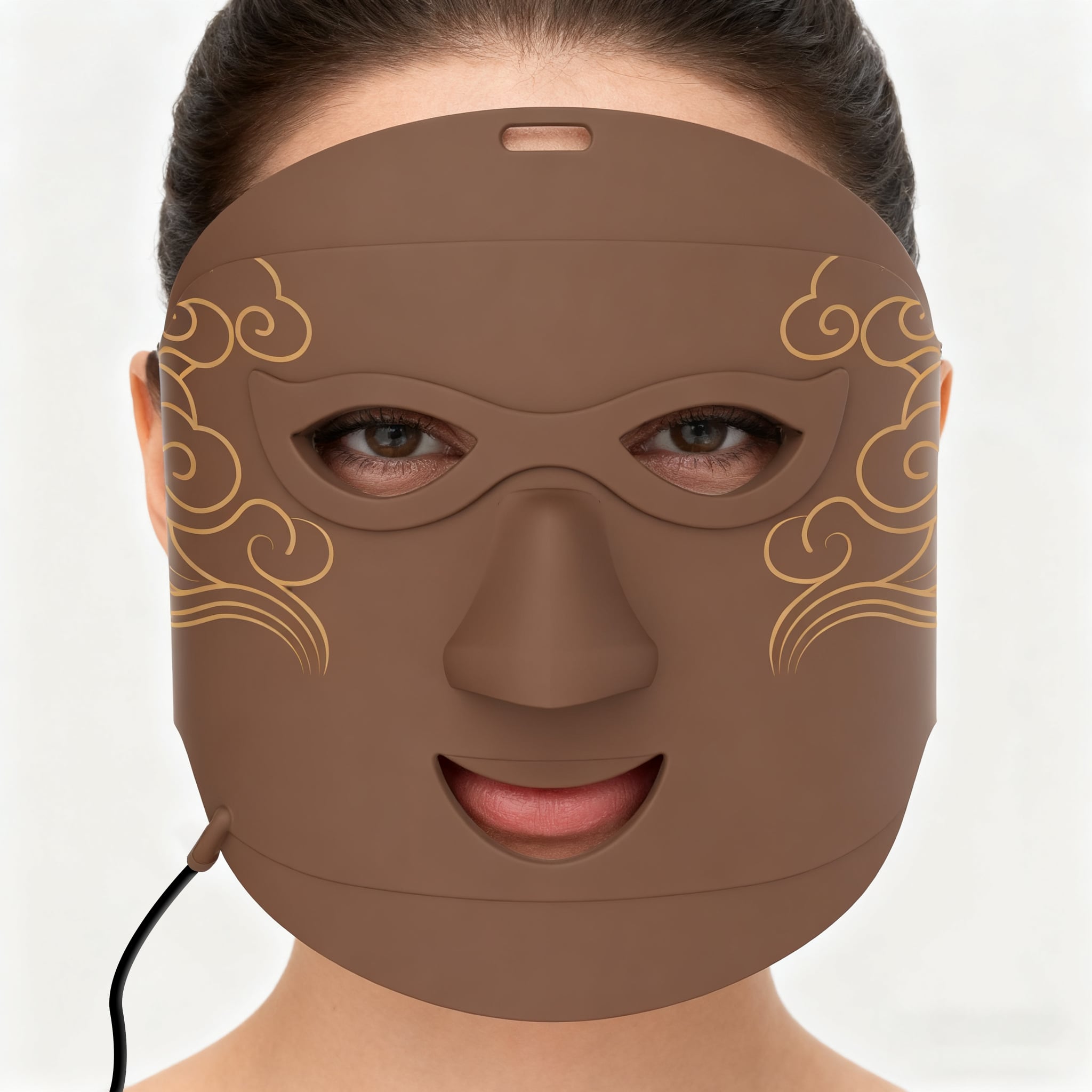
When people compare a red light mask, they often start with wavelength, LED count, or the number of treatment modes. Those details can matter, but they do not answer a more practical question: how evenly does the light reach the parts of the face you want to treat? Uniform light distribution is what turns a collection of LEDs into a more consistent at-home treatment experience.
As a technical adviser evaluating home beauty devices, I look beyond an impressive specification sheet. A red light mask should make its intended exposure reasonably repeatable across the forehead, cheeks, nose, chin, and jawline—not concentrate it in a few bright zones while leaving contours underexposed. That is why distribution deserves attention before a shopper treats LED count as a shortcut for quality.
Light distribution describes how consistently a device delivers light across its intended treatment area. In a red light mask, LEDs are positioned around a curved surface, while the face has recesses and projections. The bridge of the nose, eye area, cheekbones, and jaw all sit at different distances and angles from the emitters. A design can have plenty of LEDs and still deliver noticeably different exposure from one facial zone to another.
This is also why uniformity and coverage are related but not identical. Coverage asks, “Does the mask extend over this area?” Uniformity asks, “Is the delivered light in that area broadly comparable to the rest of the treatment field?” A wide-looking mask with uneven spacing or large gaps around contours may cover more surface visually without producing a similarly even exposure pattern.
Radiometry distinguishes wavelength, irradiance, treatment area, exposure time, and radiant exposure. In plain language, irradiance is the optical power delivered over a unit of area. A single wavelength claim therefore cannot tell you whether the same practical dose reaches the cheeks and the edge of the jaw. For a red light mask, distribution affects how credible a published irradiance value is as a description of the whole face rather than one favorable measurement point.
Photobiomodulation routines depend on repeated use within a device’s intended protocol. If one zone consistently receives more light than another, the experience may be less even from area to area. This does not mean every millimeter of a face needs the exact same reading; facial anatomy makes ideal uniformity unrealistic. The useful goal is a well-engineered treatment field with no obvious hot spots or neglected zones.
That distinction is important for people who expect a red light mask to support the overall appearance of their skin. If the mask is designed for full-face use, the cheeks, forehead, and lower face should not feel like separate treatments. Good distribution helps the device behave more like a coherent system.
It is tempting to compensate for weaker-looking areas by extending a session. That approach is unreliable. Published light-treatment studies use varied wavelengths, irradiance levels, treatment areas, and schedules, so there is no universal rule that a longer session produces a better result. When a mask distributes light more evenly, the supplied timing guidance is easier to follow as intended. When the distribution is uncertain, adding time may only increase exposure in already brighter areas.
In other words, uniformity supports repeatability. It gives users a better reason to follow a consistent schedule instead of chasing results by changing duration from one session to the next.
Uniform distribution is a design outcome, not a single feature. Several choices work together:
Here is a useful correction to a common buying habit: more LEDs do not automatically mean better uniformity. The placement, spacing, output management, and fit of those LEDs matter more than a headline number alone.
Most shoppers will not have access to a laboratory beam-profile map. You can still ask better questions. First, look for a coverage diagram or irradiance information that explains where and how measurements were taken. A claim measured only at the center of a flat surface tells you less about a curved, wearable device than a description of the intended facial treatment area.
Second, inspect product images critically. Are LEDs distributed around the forehead, cheeks, and lower face, or clustered only in the central panel? Notice the openings around the eyes and nose as well. These are necessary design features, but large unaddressed gaps may matter if they sit beside areas you expect the mask to treat.
Third, ask whether the manufacturer explains the protocol in a way that matches the device. Clear guidance should state session length, frequency, care instructions, and relevant safety boundaries. Be cautious of a red light mask that makes sweeping outcome promises while offering little information about treatment field, fit, or use conditions.
A stable, comfortable fit is not merely a luxury. If the mask presses painfully on the nose, slips off the cheeks, or needs frequent repositioning, the real-world treatment field changes each time you use it. Start with the manufacturer’s schedule rather than increasing time because one area seems less bright. If you experience unusual sensitivity, irritation, pain, or have a condition or medication associated with photosensitivity, stop use and consult an appropriate clinician.
Individual tolerance can vary, including across skin types and personal circumstances. That is another reason to prefer measured, well-explained device design over aggressive promises. A good home routine is consistent, comfortable, and aligned with the instructions—not an attempt to maximize intensity at every session.
No. A red light mask can have many LEDs while still leaving uneven spacing, contour gaps, or unstable fit. Layout, optics, and the distance from the skin matter alongside the component count.
No wearable red light mask is likely to produce an identical reading across every facial contour. Look instead for an intentionally designed treatment field without obvious concentrated or neglected zones.
Fit changes the distance and angle between each LED and the skin. A red light mask that shifts during a session cannot deliver the same positioning consistently from one use to the next.
Do not assume extra time corrects an uneven treatment field. Follow the red light mask manufacturer’s protocol, because a longer session may disproportionately increase exposure in brighter areas.
A credible red light mask description should explain intended facial coverage, protocol, fit, and how its light-output claims were measured—not only list wavelengths or modes.
Uniform light distribution is critical because it connects a red light mask’s specifications to the treatment experience across the face. Wavelength describes the type of light; LED count describes a component total; distribution helps determine whether the intended light is delivered consistently where the mask is meant to work. When comparing options, prioritize a credible treatment-field design, stable fit, sensible protocol, and transparent measurement information. Those details offer a more useful quality signal than a long list of modes or the brightest marketing claim.

2026/10/30
Discover why in-house mold development helps an RF beauty device manufacturer improve product consistency, iteration speed, tooling control, and production readiness.

2026/10/30
Learn how to verify an RF beauty device manufacturer's R&D and prototyping capabilities using practical engineering workflows and audit checklists.

2026/10/30
Learn what shapes MOQ when choosing an RF beauty device manufacturer and how to plan a lower-risk first order with balanced platform and customization.

2026/10/30
Use this RF beauty device manufacturer evaluation checklist to compare safety evidence, OEM and ODM capability, quality control, and launch readiness.

2026/10/30
See how technology makes beauty at home more guided, consistent, and informed—plus a practical checklist for choosing devices wisely.

2026/10/30
Explore how AI and smart devices shape the future of beauty with responsive routines, clear guidance, trustworthy design, and user-controlled care.

Ideal for daily facial care routines, providing easy-to-use beauty solutions at home.

Perfect for spas and salons’ frequent treatments, enhancing client experiences and results.

Supports dermatologists with advanced devices for professional skin therapy sessions.

Delivers innovative solutions for full-body massage and relaxation with home devices.

Features anti-aging technologies to help reduce wrinkles and stimulate skin vitality.

Specialized devices for safe and effective hair removal suitable for home or clinic use.

Our customers love the Perfect Idea beauty devices. Quality, packaging, and results are all outstanding. We saw increased repeat sales after adding their facial cleansers to our lineup. Their support team is responsive and reliable.

Perfect Idea brings innovation and reliability to home beauty appliances. Our collaboration introduced their massage tools to Japanese women, boosting customer satisfaction and growing our brand trust across the region.

We partnered with Shenzhen Perfect Idea Tech for their beauty equipment. The shipping was fast and every product matched our expectations. Their home-use massagers are especially popular with local salons and home users.

The stylish packaging and attractive design make Perfect Idea stand out. French consumers appreciate the easy instructions and visible results. Communication was efficient and orders always arrived on time.

Perfect Idea home use personal care devices have become a favorite with our clients. The beauty device line offers quality at a reasonable price, and technical training for our staff made onboarding easy.

We selected Perfect Idea for our beauty product portfolio and have seen very positive feedback from our customers. Products are easy to market online and the customer support is reliable and helpful.
