 EN
Home Skincare
Ideal for daily facial care routines, providing easy-to-use beauty solutions at home.

2026/09/28
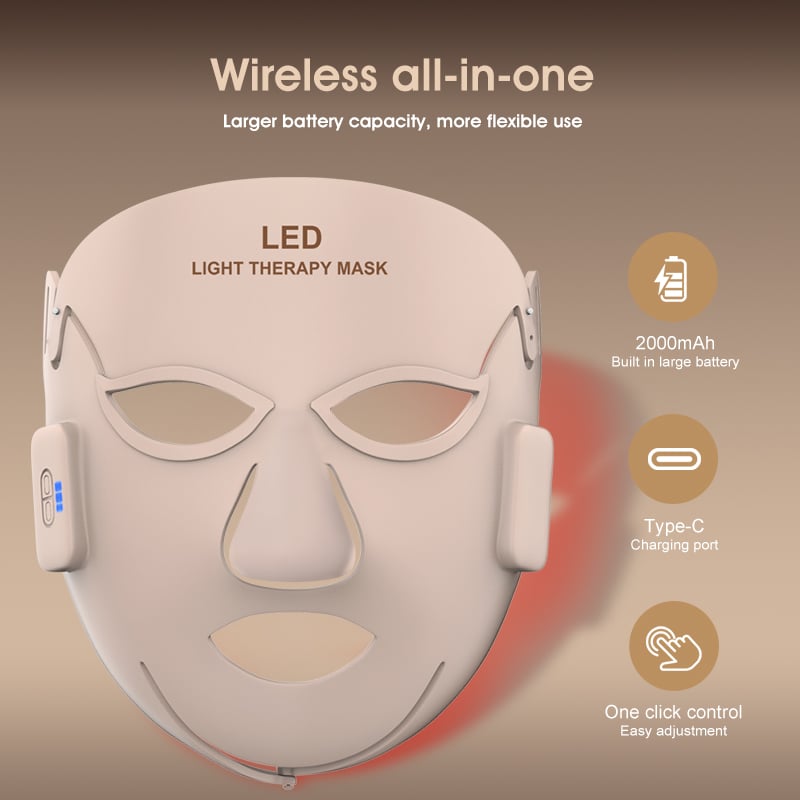
A silicone mask is becoming a familiar format in home LED therapy because it solves a practical problem: light-based skincare only works when people can use the device consistently and position it reasonably well on the face. The material alone does not make a device effective, and it does not turn every product into a clinical treatment. Still, a flexible silicone mask can make the at-home experience less fussy than a rigid shell.
As a home beauty-device technical adviser, I look at more than a feature list. For a wearable LED device, the useful questions are whether it fits different facial contours, whether it is comfortable enough to use as directed, whether the light source and eye-safety design are clearly explained, and whether the manufacturer gives realistic instructions. That is why the silicone-mask format has gained traction: it is closely tied to daily usability.
Many shoppers start by comparing colors, diode counts, or marketing claims. Those details can matter, but they are not the whole decision. A hard plastic LED device may feel bulky on some faces, slip when the wearer changes position, or leave pressure points around the bridge of the nose. If a silicone mask is uncomfortable, it is more likely to stay in a drawer than become part of a routine.
A silicone mask addresses that friction through flexibility. Rather than relying on one fixed face shape, the material can sit closer to varied contours. Consumer testing coverage commonly describes soft silicone designs as more adaptable than rigid plastic options. That is a comfort and fit observation, not proof that silicone automatically delivers better biological results. The difference is important: a better-fitting silicone mask may support more repeatable placement, while the device’s wavelengths, irradiance, treatment protocol, and safety engineering still determine what it is designed to do.
LED therapy masks are intended to bring light close to the skin. When a rigid LED mask housing sits far away from parts of the face, the distance and angle can vary from one area to another. A flexible silicone mask can reduce some of those gaps around the cheeks, jawline, and forehead, especially for people whose facial proportions do not match a molded shell.
This does not mean a flexible product should be pressed tightly into the skin. LEDs still need a thoughtful physical layout, appropriate heat management, and clear wearing guidance. The practical advantage is simpler: the silicone mask can conform without asking the user to hold it in place. In other words, it aims for stable, repeatable positioning rather than a one-size-fits-all geometry.
That point is often lost in broad claims about the “right” silicone mask. A material is only one part of a system. Shoppers should consider whether the straps keep the unit stable, whether the eye area is well designed, whether the mask feels balanced, and whether the stated session length is realistic for their routine.
Home LED therapy is generally presented as a routine-based approach, not a one-session solution. So comfort has a direct practical role. A lightweight silicone mask may feel less restrictive when a person is sitting, reclining, or doing a quiet task during a session. It can also be easier to clean gently after use because the surface is typically nonporous, although users should follow the specific manufacturer’s cleaning instructions rather than assume every product has the same care requirements.
People often assume that more functions make a device more valuable. In use, a product that is easy to secure and comfortable to wear can be more useful than a complicated device that gets used only occasionally. If your priority is building a manageable routine, start with fit and instructions before being persuaded by a long list of modes.
There are limits. Some users dislike the feel of a close-fitting silicone mask, have sensory sensitivities, or find any face-worn device inconvenient. A rigid mask is not inherently wrong; it may suit someone who prefers a structured shape or a particular strap system. The goal is a form factor that the individual can use calmly and consistently.
The rise of the silicone mask also reflects a broader expectation for home beauty devices: they should be approachable without pretending to replace medical care. A wearable design keeps the LEDs in a defined arrangement and gives users a hands-free alternative to holding a panel at a chosen distance. That makes a short, device-directed session easier to repeat.
For brands developing home LED products, silicone can support a more accommodating fit concept. However, a flexible material should not be used as a shortcut around engineering. The product still needs durable construction, a clear power and timer system, appropriate eye protection, and instructions that state who should avoid use or seek professional advice. A silicone mask should also be assessed for how a silicone mask’s straps, seams, openings, and light modules hold up over time.
Research on light-based devices may evaluate specific wavelengths, treatment schedules, and populations. For example, a randomized, double-blind multicenter study has examined a home-used LED and infrared silicone mask for temporary improvement of crow’s feet. That is useful context, but it does not validate every home mask or every claim made about a silicone mask. Results from one evaluated device and protocol cannot simply be transferred to another.
The same caution applies to terms such as red light, near-infrared light, blue light, and photobiomodulation. They describe categories or mechanisms, not a guarantee of outcome. Look for a manufacturer that explains the intended use and avoids promises that sound like a diagnosis, cure, or substitute for professional treatment. If you are managing a skin condition or taking medication associated with photosensitivity, ask a qualified clinician before starting a new light-based routine.
Comfort should not outweigh safety. Clinical guidance for at-home LED devices emphasizes following the manufacturer’s directions and using appropriate eye protection. Before choosing a silicone mask, check how the product handles the eye area, what the instructions say about wearing it, and whether any contraindications are clearly disclosed. Do not stare into bright LEDs, alter a silicone mask device, or extend a session beyond the stated protocol.
Stop using a device if it causes pain, excessive heat, or unexpected irritation, and seek professional advice when needed. People with eye conditions, photosensitivity concerns, or questions about medicines and light exposure should be especially careful. A safer home routine is not defined by the softness of the mask; it is defined by appropriate device design and responsible use.
A silicone mask is usually a convenience choice before it is a technology claim. A well-designed silicone mask should be easy to place, easy to remove, and comfortable for the full stated session. If a silicone mask shifts when you recline, the strap adjustment or face shape may not suit you.
Use the silicone mask on clean, dry skin only if the device directions say to do so. Wipe the silicone mask as instructed, let it dry fully, and store the silicone mask where its light surface and straps are protected. Do not share a silicone mask when hygiene is a concern.
For a first session, follow the stated protocol rather than trying to “catch up.” A silicone mask is not improved by longer exposure. If a silicone mask feels hot, painful, or irritating, stop the session and consult the manufacturer’s guidance or a qualified clinician.
A silicone mask is becoming a leading home LED therapy format because flexibility can improve fit, comfort, and the likelihood that a user follows a routine. Those are meaningful advantages in a wearable device. But silicone is not a clinical result in itself. The most sensible choice combines a comfortable fit with transparent instructions, credible device-specific evidence, thoughtful eye safety, and expectations grounded in regular, appropriate use.

2026/10/30
Discover why in-house mold development helps an RF beauty device manufacturer improve product consistency, iteration speed, tooling control, and production readiness.

2026/10/30
Learn how to verify an RF beauty device manufacturer's R&D and prototyping capabilities using practical engineering workflows and audit checklists.

2026/10/30
Learn what shapes MOQ when choosing an RF beauty device manufacturer and how to plan a lower-risk first order with balanced platform and customization.

2026/10/30
Use this RF beauty device manufacturer evaluation checklist to compare safety evidence, OEM and ODM capability, quality control, and launch readiness.

2026/10/30
See how technology makes beauty at home more guided, consistent, and informed—plus a practical checklist for choosing devices wisely.

2026/10/30
Explore how AI and smart devices shape the future of beauty with responsive routines, clear guidance, trustworthy design, and user-controlled care.

Ideal for daily facial care routines, providing easy-to-use beauty solutions at home.

Perfect for spas and salons’ frequent treatments, enhancing client experiences and results.

Supports dermatologists with advanced devices for professional skin therapy sessions.

Delivers innovative solutions for full-body massage and relaxation with home devices.

Features anti-aging technologies to help reduce wrinkles and stimulate skin vitality.

Specialized devices for safe and effective hair removal suitable for home or clinic use.

Our customers love the Perfect Idea beauty devices. Quality, packaging, and results are all outstanding. We saw increased repeat sales after adding their facial cleansers to our lineup. Their support team is responsive and reliable.

Perfect Idea brings innovation and reliability to home beauty appliances. Our collaboration introduced their massage tools to Japanese women, boosting customer satisfaction and growing our brand trust across the region.

We partnered with Shenzhen Perfect Idea Tech for their beauty equipment. The shipping was fast and every product matched our expectations. Their home-use massagers are especially popular with local salons and home users.

The stylish packaging and attractive design make Perfect Idea stand out. French consumers appreciate the easy instructions and visible results. Communication was efficient and orders always arrived on time.

Perfect Idea home use personal care devices have become a favorite with our clients. The beauty device line offers quality at a reasonable price, and technical training for our staff made onboarding easy.

We selected Perfect Idea for our beauty product portfolio and have seen very positive feedback from our customers. Products are easy to market online and the customer support is reliable and helpful.
