 EN
Home Skincare
Ideal for daily facial care routines, providing easy-to-use beauty solutions at home.

2026/10/10
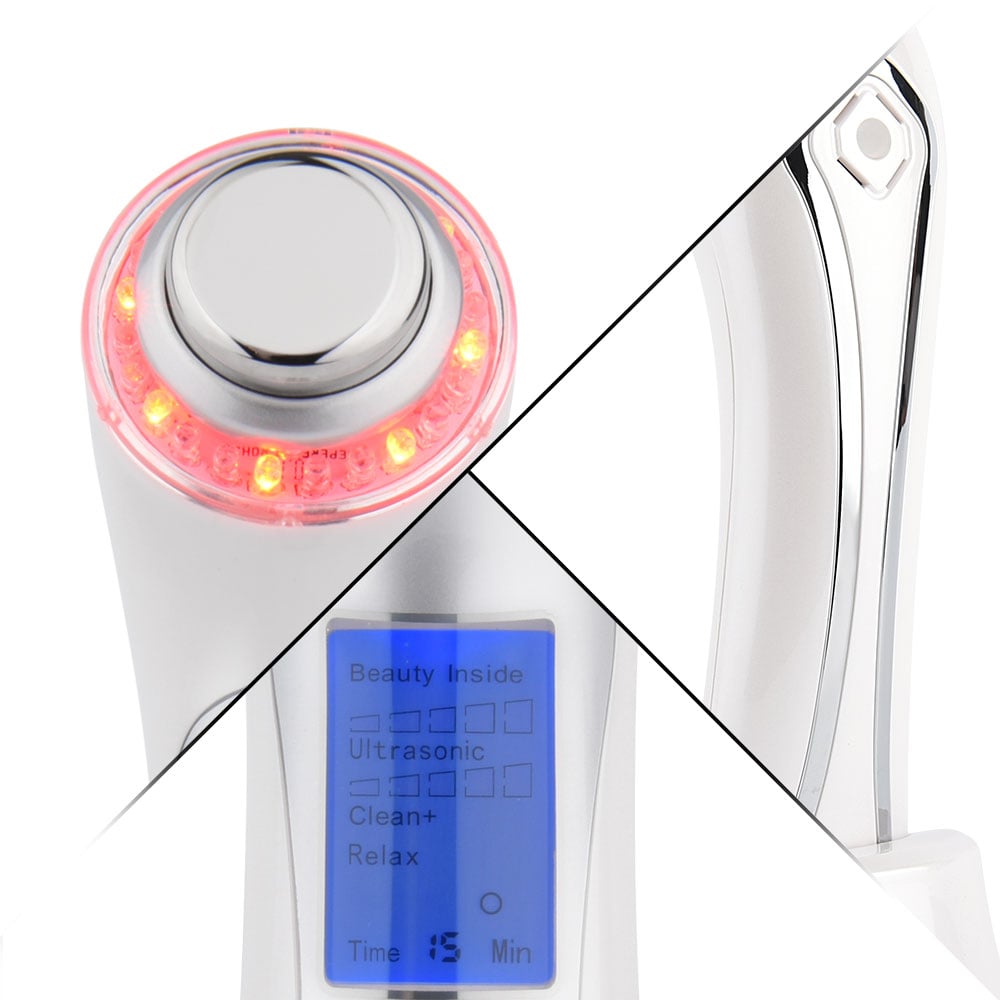
People often ask whether a red light therapy face routine can calm rosacea because the goal is understandable: less visible redness, less discomfort, and a skincare step that does not feel harsh. The careful answer is that a red light therapy face treatment may support calmer-looking skin for some people, but it is not a cure and it is not a substitute for diagnosis or a clinician-led rosacea plan.
Rosacea is not simply a surface-redness problem. Flushing, persistent redness, visible vessels, bumps, stinging, dryness, and eye symptoms can overlap, and triggers differ from person to person. That is why a red light therapy face routine should be judged by tolerance, consistency, and the pattern of your flares—not by a dramatic before-and-after promise.
A home red LED device used for a red light therapy face routine uses low-level visible red light, usually delivered by LEDs. The broader term is photobiomodulation: light is intended to interact with cells without ablating or peeling the skin. Unlike a treatment that intentionally creates heat or exfoliation, a well-designed LED session is generally approached as a gentle supportive modality.
Why might that matter for rosacea-prone skin? Inflammation, barrier disruption, and reactivity can all contribute to how redness feels and looks. Laboratory and early clinical research suggests photobiomodulation may influence inflammatory signaling and tissue-repair processes. A 2025 review of clinical and experimental research concluded that photobiomodulation could reduce rosacea hallmarks and symptoms, while also emphasizing that the evidence base is still limited. That distinction matters: promising mechanisms are not the same thing as a predictable outcome.
When an at-home red LED routine feels helpful, the change is usually gradual. It may be easier to maintain a comfortable skincare routine, and skin may appear less reactive between known triggers. The modality is often discussed in relation to inflammatory pathways, wound-healing responses, and collagen-related processes, but no at-home LED device should be described as treating every subtype or cause of rosacea.
The practical point is less dramatic: low irritation can be valuable when considering red light therapy face care. Someone whose skin reacts to aggressive scrubs, strong acids, fragrance, or frequent switching of products may value a minimal LED step precisely because it does not require adding another active topical. Still, a gentle modality can be a poor fit if the device feels hot, creates discomfort, or coincides with more flushing.
This is an important correction. A home red LED mask is not equivalent to in-office laser or intense pulsed light (IPL) therapy. Dermatologists may use IPL to address flushing and skin texture in appropriate patients, with settings selected for the individual. A consumer LED device has a different purpose, power profile, and evidence base.
Do not assume that more light, more minutes, or more warmth will bring faster relief. Rosacea can flare with heat. For that reason, a cautious red light therapy face approach is often the least aggressive one that you can use comfortably and consistently. If a device manual conflicts with your dermatologist’s advice, follow the clinician who knows your skin and medical history.
Check with a dermatologist or other qualified clinician before using a home light device if you have photosensitivity, take medicines that increase light sensitivity, have an active unexplained rash, are recovering from a procedure, or have ocular rosacea symptoms. It is also sensible to ask about eye protection and whether a given device is appropriate for your diagnosis.
It also helps to ask early: effective rosacea care can include prescription topicals, oral medicines, and clinician-directed procedures. A home LED routine may fit alongside those measures for some people, but it should not delay proven treatment when symptoms are persistent or affecting quality of life.
A realistic goal for a home-light trial is supportive care: a comfortable, consistent routine that may help some users feel that their skin looks calmer over time. Expecting an instant cure, complete removal of visible vessels, or freedom from triggers sets up disappointment. Results, if any, are individual and usually subtle.
A more useful way to frame the question is this. Instead of asking whether red light therapy face treatment “works” in the abstract, ask: Does it fit my diagnosed condition, my trigger pattern, my treatment plan, and my ability to use it without heat or irritation? That is a better decision standard for sensitive skin.
This light-based approach can be appealing for rosacea because low-level red light may support anti-inflammatory and recovery-related processes without adding a harsh topical step. Current evidence is encouraging but limited, and home devices are not interchangeable with clinical light treatments. Keep expectations measured, follow device directions, stop if symptoms worsen, and involve a dermatologist when rosacea is active, uncertain, or difficult to control.
This article is educational information, not medical advice. Consult a qualified healthcare professional for personal diagnosis and treatment guidance.

2026/10/30
Discover why in-house mold development helps an RF beauty device manufacturer improve product consistency, iteration speed, tooling control, and production readiness.

2026/10/30
Learn how to verify an RF beauty device manufacturer's R&D and prototyping capabilities using practical engineering workflows and audit checklists.

2026/10/30
Learn what shapes MOQ when choosing an RF beauty device manufacturer and how to plan a lower-risk first order with balanced platform and customization.

2026/10/30
Use this RF beauty device manufacturer evaluation checklist to compare safety evidence, OEM and ODM capability, quality control, and launch readiness.

2026/10/30
See how technology makes beauty at home more guided, consistent, and informed—plus a practical checklist for choosing devices wisely.

2026/10/30
Explore how AI and smart devices shape the future of beauty with responsive routines, clear guidance, trustworthy design, and user-controlled care.

Ideal for daily facial care routines, providing easy-to-use beauty solutions at home.

Perfect for spas and salons’ frequent treatments, enhancing client experiences and results.

Supports dermatologists with advanced devices for professional skin therapy sessions.

Delivers innovative solutions for full-body massage and relaxation with home devices.

Features anti-aging technologies to help reduce wrinkles and stimulate skin vitality.

Specialized devices for safe and effective hair removal suitable for home or clinic use.

Our customers love the Perfect Idea beauty devices. Quality, packaging, and results are all outstanding. We saw increased repeat sales after adding their facial cleansers to our lineup. Their support team is responsive and reliable.

Perfect Idea brings innovation and reliability to home beauty appliances. Our collaboration introduced their massage tools to Japanese women, boosting customer satisfaction and growing our brand trust across the region.

We partnered with Shenzhen Perfect Idea Tech for their beauty equipment. The shipping was fast and every product matched our expectations. Their home-use massagers are especially popular with local salons and home users.

The stylish packaging and attractive design make Perfect Idea stand out. French consumers appreciate the easy instructions and visible results. Communication was efficient and orders always arrived on time.

Perfect Idea home use personal care devices have become a favorite with our clients. The beauty device line offers quality at a reasonable price, and technical training for our staff made onboarding easy.

We selected Perfect Idea for our beauty product portfolio and have seen very positive feedback from our customers. Products are easy to market online and the customer support is reliable and helpful.
