 EN
Home Skincare
Ideal for daily facial care routines, providing easy-to-use beauty solutions at home.

2026/10/07
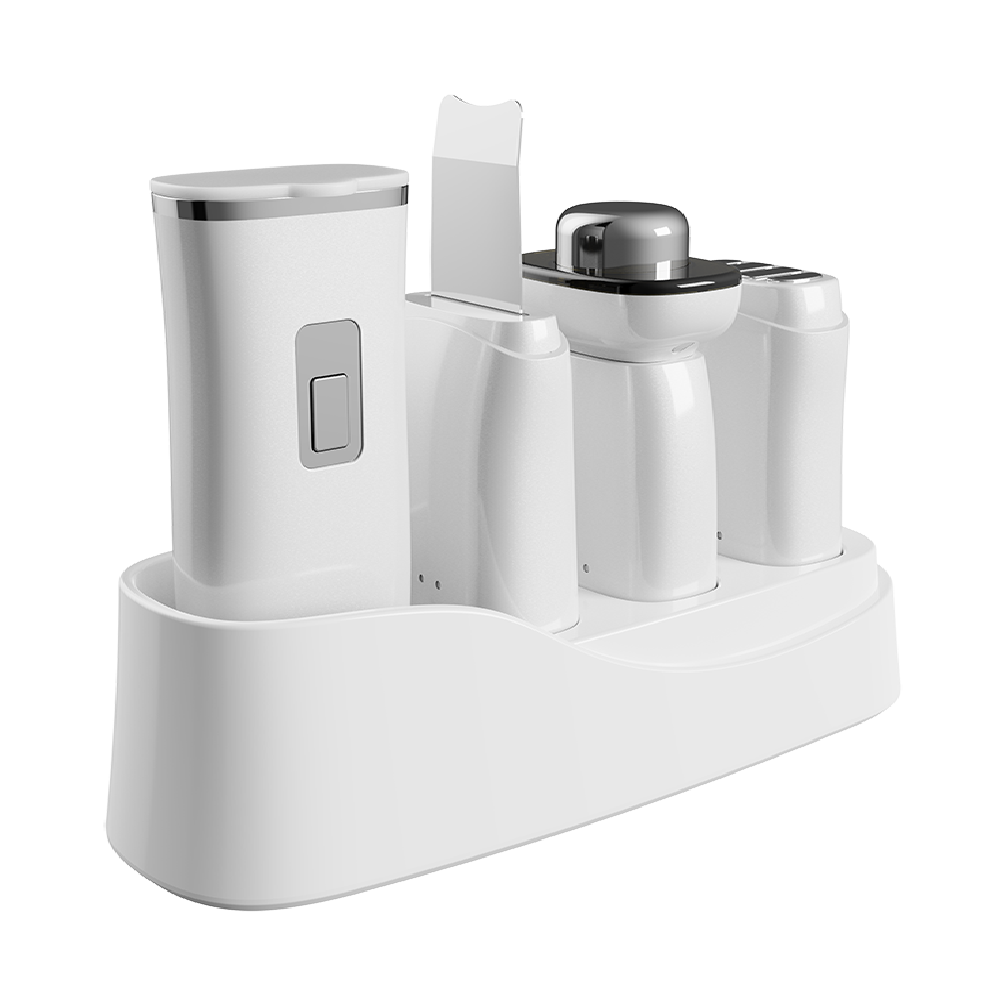
“Outperform” is a useful question, but it needs a careful answer. Beauty tools that use low-intensity ultrasonic or sonic motion can make a cleansing routine more consistent by adding rapid, even movement across the skin. They do not automatically clean better for every person, every cleanser, or every day. Manual cleansing with clean fingertips remains a sound baseline, especially for reactive skin. The advantage of certain beauty tools is less about replacing good technique and more about reducing the variables that make manual cleansing uneven.
As a home-beauty-device technical adviser, I would start with the routine rather than a headline feature. Skin condition, makeup or sunscreen load, cleanser type, contact pressure, and frequency matter more than a dramatic promise. Used gently, ultrasonic-style beauty tools can support a repeatable cleanse. Used aggressively, the same category can create avoidable irritation.
Consumer cleansing beauty tools are typically handheld devices with a silicone surface, metal spatula-style head, or other contact surface that moves at high frequency. In practical terms, that motion helps spread cleanser and water across a defined area while the user glides the device over the face. The intended effect is to loosen surface residue—such as sebum, sunscreen, makeup remnants, and daily grime—without relying on scrubbing particles or a rough cloth.
That description should not be confused with clinical or high-intensity cosmetic ultrasound. Home cleansing beauty tools are not a substitute for medical treatment, and they should not be marketed as if they deliver the same tissue effects as professional procedures. The sensible comparison is much narrower: how consistently the device helps remove routine surface buildup versus hands alone.
With fingertips, people naturally spend more time on easy-to-reach areas and less on the sides of the nose, chin crease, hairline, or jaw. Ultrasonic beauty tools encourage a slow, section-by-section pass. That does not guarantee better cleansing, but it can make coverage more deliberate. The benefit is particularly practical for people whose manual routine is rushed or inconsistent.
Manual cleansing sometimes turns into friction: repeated rubbing, a washcloth, or pressure meant to create a “squeaky clean” feeling. Well-designed beauty tools can shift the user toward light contact and glide, provided the device is used with enough water and cleanser. This is an important qualification: a device pressed hard into dry skin is not gentler simply because it is powered.
The real value of many beauty tools is behavioral. A timer, a defined head shape, and a short sequence can make a two-step cleanse easier to repeat. Consistency is often more useful than adding extra intensity. In other words, a modest device routine performed correctly may be preferable to an elaborate manual routine that is abandoned after a week.
Manual cleansing is not the inferior option by default. Dermatology guidance commonly favors a gentle, non-abrasive cleanser applied with fingertips, and that advice highlights an essential point: the skin barrier does not need to be challenged to feel clean. For very sensitive, inflamed, over-exfoliated, or recently treated skin, hands can be the lower-risk choice because they offer immediate feedback about pressure and discomfort.
Manual cleansing also gives the user precise control around the eyes, active blemishes, and dry patches. Some beauty tools are reasonably viewed as an optional routine aid rather than a daily requirement. If a person already removes sunscreen and makeup thoroughly with a mild cleanser, a device may add convenience more than a dramatic change in results.
| Question | Manual cleansing | Ultrasonic-style beauty tools |
|---|---|---|
| Control of pressure | Immediate and intuitive | Good only with light contact and correct technique |
| Coverage consistency | Depends on habit | Can improve with a timed, sectioned routine |
| Suitability for reactive skin | Often the simplest starting point | Needs cautious frequency and a stop rule for irritation |
| Routine motivation | No charging or cleaning required | May make a routine easier to repeat |
| Maintenance | Clean hands only | Requires cleaning and drying the device surface |
This comparison explains why some users report that beauty tools outperform hands for them: the device improves coverage and routine discipline. It does not establish that every device removes more debris or improves skin health for everyone.
Pause or simplify the routine if cleansing causes persistent burning, redness, flaking, or worsening sensitivity. People with active inflammatory skin conditions, compromised skin, recent procedures, or uncertainty about a device’s instructions should seek individualized professional advice. Avoid treating consumer beauty tools as a solution for a medical concern. The same restraint applies when a product uses the word “ultrasonic”: check the intended use, follow the manufacturer’s directions, and do not infer clinical claims from a cleansing function.
Ultrasonic beauty tools can outperform manual cleansing methods when they solve a real routine problem: uneven coverage, excessive rubbing, or inconsistent habits. Their strongest advantage is controlled, repeatable movement—not a promise that more technology automatically means cleaner or healthier skin. For a gentle, reliable routine, begin with fingertips and a mild cleanser; add beauty tools only if they make that routine easier to perform with less friction and better consistency.
That is the most useful standard for evaluating beauty tools: choose a device that supports good cleansing habits, then reduce use if the skin signals that it is too much.

2026/10/30
Discover why in-house mold development helps an RF beauty device manufacturer improve product consistency, iteration speed, tooling control, and production readiness.

2026/10/30
Learn how to verify an RF beauty device manufacturer's R&D and prototyping capabilities using practical engineering workflows and audit checklists.

2026/10/30
Learn what shapes MOQ when choosing an RF beauty device manufacturer and how to plan a lower-risk first order with balanced platform and customization.

2026/10/30
Use this RF beauty device manufacturer evaluation checklist to compare safety evidence, OEM and ODM capability, quality control, and launch readiness.

2026/10/30
See how technology makes beauty at home more guided, consistent, and informed—plus a practical checklist for choosing devices wisely.

2026/10/30
Explore how AI and smart devices shape the future of beauty with responsive routines, clear guidance, trustworthy design, and user-controlled care.

Ideal for daily facial care routines, providing easy-to-use beauty solutions at home.

Perfect for spas and salons’ frequent treatments, enhancing client experiences and results.

Supports dermatologists with advanced devices for professional skin therapy sessions.

Delivers innovative solutions for full-body massage and relaxation with home devices.

Features anti-aging technologies to help reduce wrinkles and stimulate skin vitality.

Specialized devices for safe and effective hair removal suitable for home or clinic use.

Our customers love the Perfect Idea beauty devices. Quality, packaging, and results are all outstanding. We saw increased repeat sales after adding their facial cleansers to our lineup. Their support team is responsive and reliable.

Perfect Idea brings innovation and reliability to home beauty appliances. Our collaboration introduced their massage tools to Japanese women, boosting customer satisfaction and growing our brand trust across the region.

We partnered with Shenzhen Perfect Idea Tech for their beauty equipment. The shipping was fast and every product matched our expectations. Their home-use massagers are especially popular with local salons and home users.

The stylish packaging and attractive design make Perfect Idea stand out. French consumers appreciate the easy instructions and visible results. Communication was efficient and orders always arrived on time.

Perfect Idea home use personal care devices have become a favorite with our clients. The beauty device line offers quality at a reasonable price, and technical training for our staff made onboarding easy.

We selected Perfect Idea for our beauty product portfolio and have seen very positive feedback from our customers. Products are easy to market online and the customer support is reliable and helpful.
