 EN
Home Skincare
Ideal for daily facial care routines, providing easy-to-use beauty solutions at home.

2026/09/30
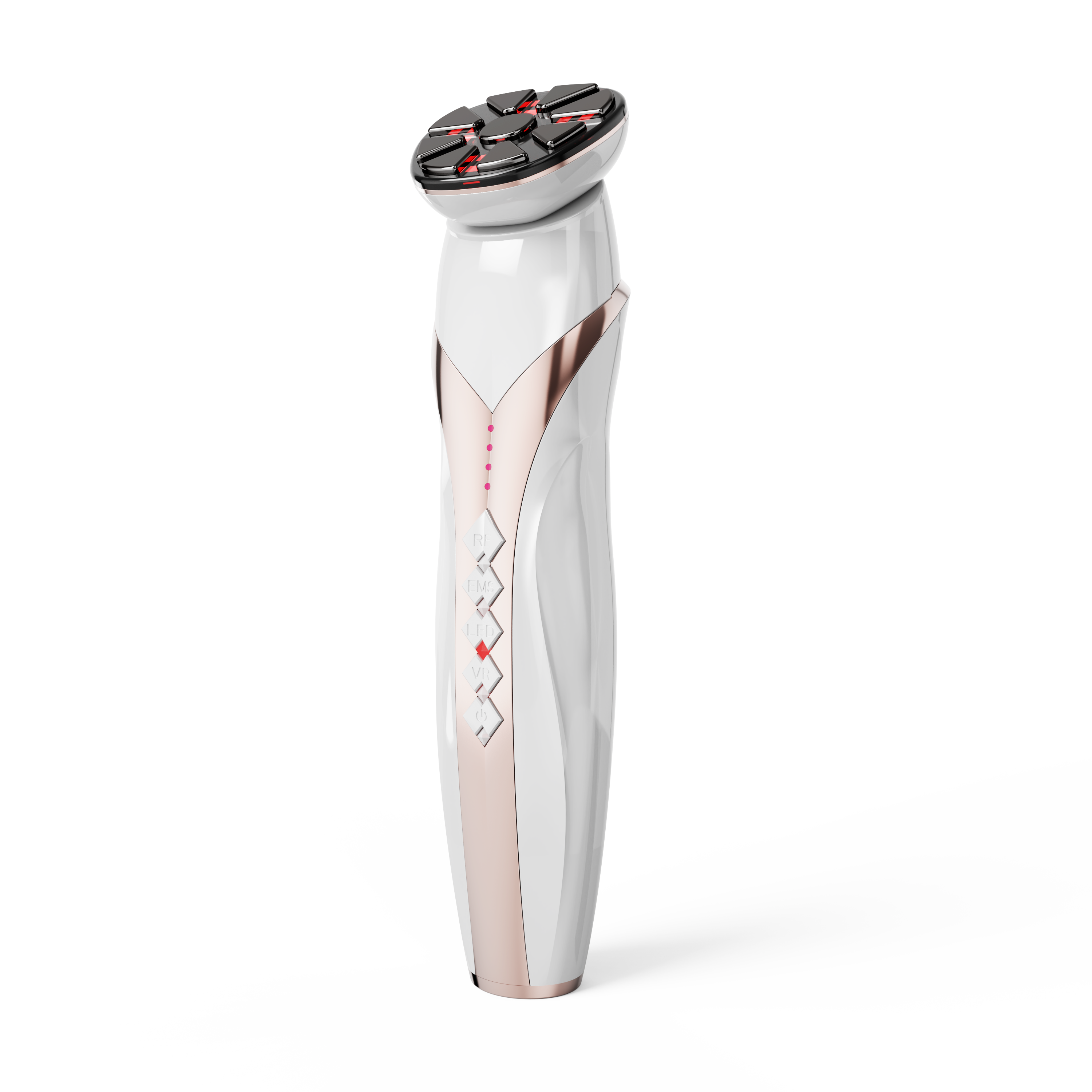
For a brand owner, choosing an RF beauty device manufacturer is not simply a question of who can quote a workable unit price. It is a decision about who controls the chain of events between a concept, a sample, a production run, and the units that reach customers. Full vertical integration can make that chain easier to see, test, and manage.
That does not mean every integrated factory is automatically the right partner. It means the buyer has a clearer route to verify how design decisions, sourcing, assembly, quality checks, packaging, and technical support connect. For an RF program, where intended use, safety expectations, user instructions, and market documentation all matter, that visibility can reduce avoidable handoffs.
In practical sourcing terms, vertical integration means that a manufacturer retains meaningful control over several connected stages instead of acting only as a trading layer or final assembler. The exact scope varies by supplier, so buyers should ask for a process map rather than accept the label at face value.
The point is not that one factory must make every component itself. The point is accountability: who owns each critical decision, who can trace a change, and who can act when a test result or field issue requires a response?
A common sourcing frustration is a sample that feels polished while the first production batch reveals inconsistent fit, finish, labeling, or assembly. A vertically integrated RF beauty device manufacturer is better positioned to keep design intent, work instructions, incoming-material checks, and final inspection criteria connected. That is not a guarantee of zero defects. It gives the buyer a shorter path to ask how the approved sample is translated into repeatable production controls.
Ask to see the approved-sample record, the version-control method for drawings and firmware, the production inspection points, and the method for dealing with nonconforming units. Those documents are more informative than a broad promise of “same quality as sample.”
Private-label RF products often evolve after early samples. A brand may need a revised housing, a different treatment head, a localized manual, alternate packaging, or a modified user-interface flow. When engineering, purchasing, production, and quality teams operate within one connected organization, the manufacturer can assess the knock-on effects before a change enters the line.
Buyers should still require formal change approval. The useful question is: Which teams sign off, what is retested, and how is the new revision identified on future orders? A capable partner can answer without relying on a chain of separate intermediaries.
Vertical integration is valuable when it closes the loop. If a distributor reports a recurring cosmetic defect, charging issue, or packaging complaint, the relevant factory functions should be able to review retained records, isolate the affected lot, identify the likely process point, and document corrective action. The buyer should ask for the route from complaint to root-cause review—not merely a statement that support is available.
From an international buyer’s perspective, this matters because a minor issue at the factory can become a costly review, return, or channel problem in the destination market. A stronger working relationship is one in which commercial, technical, and quality contacts share the same facts.
RF is a broad term, and different device types can carry very different intended-use and regulatory considerations. For example, the FDA states that RF microneedling is a medical procedure and should not be used at home. That distinction is a useful reminder: a buyer must not assume that an RF label, a supplier claim, or documentation for one configuration applies to another product or market.
A full-service RF beauty device manufacturer can help coordinate documentation, labeling, testing records, and product changes, but the buyer should verify the exact product, intended use, target country, and claim language with the appropriate compliance resources. Merchant-provided profiles may list credentials such as CE, FCC, or 510K support; they are not substitutes for product-specific verification.
| Buyer priority | What to verify at an integrated manufacturer | Why it matters |
|---|---|---|
| Faster launch preparation | One documented owner for design revisions, packaging, and manuals | Fewer disconnected approvals and clearer revision timing |
| More predictable quality | Incoming checks, in-process controls, final-test criteria, and lot traceability | Lets the buyer evaluate repeatability rather than sample appearance alone |
| Brand differentiation | How OEM/ODM requests are reviewed, prototyped, validated, and frozen | Clarifies what can be customized without creating uncontrolled changes |
| Long-term support | Complaint handling, spare-parts planning, and corrective-action ownership | Reduces uncertainty after product launch |
Use this matrix when comparing an RF beauty device manufacturer. Each question should be answered with evidence from the RF beauty device manufacturer, not a sales claim alone.
A buyer does not need every answer to be identical across projects. The aim is to determine whether the RF beauty device manufacturer has a documented system that matches the brand's risk level and launch plan.
Full vertical integration is especially worth prioritizing when a buyer is building a private-label line, expects several controlled revisions, needs coordinated packaging and documentation, or plans to serve more than one market. It can also be valuable when the brand needs a partner able to connect manufacturing feedback with future product improvements.
For more straightforward replenishment of a fixed, already-validated model, a less integrated supplier may still be viable if its quality system, documentation, and communication are strong. The right choice depends on the project’s complexity and the buyer’s appetite for coordinating multiple parties.
BEPERFECT identifies itself as a 14-year home beauty device factory serving global buyers with OEM/ODM support. For a prospective partner—or any RF beauty device manufacturer—the sensible next step is to turn that capability statement into evidence: review the process map, sample approval method, quality records, change-control workflow, and product-specific compliance documentation.
That is the practical advantage of vertical integration. It does not remove the need for due diligence. It gives a brand team more direct checkpoints at which to perform it, so the product that is approved can be more reliably connected to the product that is shipped and supported.

2026/10/30
Discover why in-house mold development helps an RF beauty device manufacturer improve product consistency, iteration speed, tooling control, and production readiness.

2026/10/30
Learn how to verify an RF beauty device manufacturer's R&D and prototyping capabilities using practical engineering workflows and audit checklists.

2026/10/30
Learn what shapes MOQ when choosing an RF beauty device manufacturer and how to plan a lower-risk first order with balanced platform and customization.

2026/10/30
Use this RF beauty device manufacturer evaluation checklist to compare safety evidence, OEM and ODM capability, quality control, and launch readiness.

2026/10/30
See how technology makes beauty at home more guided, consistent, and informed—plus a practical checklist for choosing devices wisely.

2026/10/30
Explore how AI and smart devices shape the future of beauty with responsive routines, clear guidance, trustworthy design, and user-controlled care.

Ideal for daily facial care routines, providing easy-to-use beauty solutions at home.

Perfect for spas and salons’ frequent treatments, enhancing client experiences and results.

Supports dermatologists with advanced devices for professional skin therapy sessions.

Delivers innovative solutions for full-body massage and relaxation with home devices.

Features anti-aging technologies to help reduce wrinkles and stimulate skin vitality.

Specialized devices for safe and effective hair removal suitable for home or clinic use.

Our customers love the Perfect Idea beauty devices. Quality, packaging, and results are all outstanding. We saw increased repeat sales after adding their facial cleansers to our lineup. Their support team is responsive and reliable.

Perfect Idea brings innovation and reliability to home beauty appliances. Our collaboration introduced their massage tools to Japanese women, boosting customer satisfaction and growing our brand trust across the region.

We partnered with Shenzhen Perfect Idea Tech for their beauty equipment. The shipping was fast and every product matched our expectations. Their home-use massagers are especially popular with local salons and home users.

The stylish packaging and attractive design make Perfect Idea stand out. French consumers appreciate the easy instructions and visible results. Communication was efficient and orders always arrived on time.

Perfect Idea home use personal care devices have become a favorite with our clients. The beauty device line offers quality at a reasonable price, and technical training for our staff made onboarding easy.

We selected Perfect Idea for our beauty product portfolio and have seen very positive feedback from our customers. Products are easy to market online and the customer support is reliable and helpful.
