 EN
Home Skincare
Ideal for daily facial care routines, providing easy-to-use beauty solutions at home.

2026/10/12
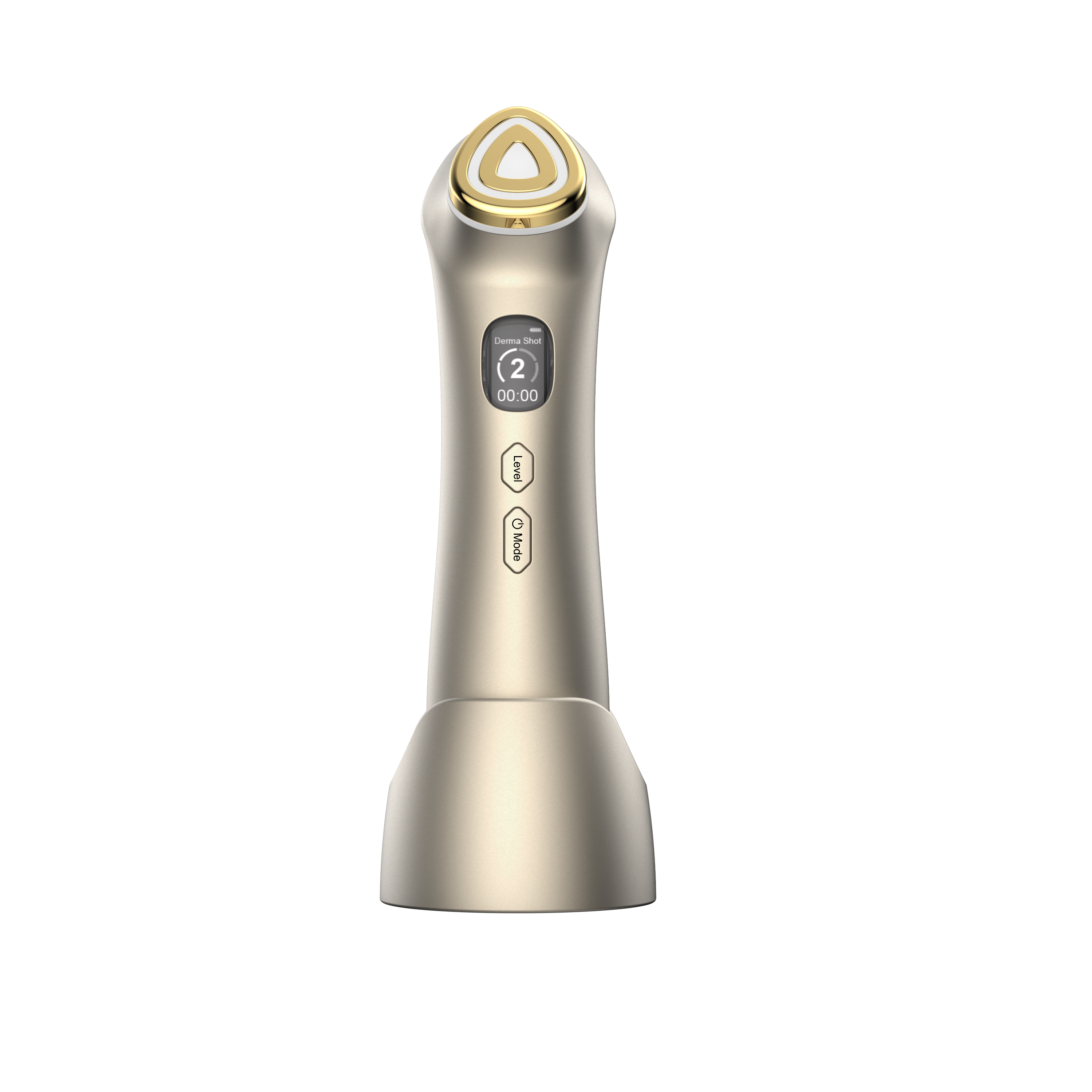
For a brand developing a home-use beauty device, selecting a Beauty equipment producer is not simply a sourcing decision. It is a decision about how reliably an idea can move from a product brief to a repeatable, supportable product. A factory may be able to quote an existing model quickly. A producer with meaningful in-house research and development can help a buyer ask better questions before tooling, samples, compliance work, and launch plans begin to lock in costs.
From an OEM/ODM brand-development perspective, the useful test is not whether a supplier says it has an R&D department. The test is whether its team can turn a target customer need into a documented design direction, explain trade-offs, validate the result, and transfer that work into stable production. That distinction matters when a brand wants more than an interchangeable catalog item.
A beauty-device brief often begins with a market opportunity: a desired routine, a preferred form factor, a target price band, or a gap in the current assortment. Between that idea and a finished unit sit choices about functions, interfaces, materials, components, charging, packaging, instructions, testing, and manufacturability. When product development is handled entirely outside the factory, those choices can pass through several handoffs. Each handoff can make feedback slower or less specific.
An in-house team gives a Beauty equipment producer a closer feedback loop between designers, engineers, sourcing, quality staff, and production personnel. That does not make every project effortless, but it can make constraints visible earlier. For example, a proposed feature may affect battery space, assembly steps, the user interface, documentation, or the lead time for a critical component. A capable team should surface those implications before a buyer treats the first concept as final. When comparing a Beauty equipment producer, ask who is accountable for that early feasibility review.
This is especially useful for brands that need a product to fit a clear use case rather than chase a long list of functions. More modes do not automatically create a better customer experience. In many projects, the more valuable question is whether the selected function can be explained, operated, maintained, and supported consistently by the intended user.
Many private-label projects begin with a familiar tension: the brand wants a distinct product, but it also needs a practical route to market. An R&D-capable Beauty equipment producer can help separate meaningful differentiation from cosmetic change. Meaningful work might involve refining the user workflow, adapting an enclosure to a market preference, choosing a more appropriate control layout, or aligning the package and instructions with the product’s intended positioning. It should not mean making unsupported performance promises.
Ask the supplier to explain the design rationale in plain language. What customer problem is the proposed change intended to solve? Which elements are fixed because of safety, reliability, tooling, or component limitations? What will be reviewed again after sample feedback? Clear answers help a buyer compare development partners without relying on a glossy rendering alone. A Beauty equipment producer that can document the reasoning gives the buyer a firmer basis for comparison.
Product development is stronger when validation is planned alongside design. A credible Beauty equipment producer should be able to discuss how a concept moves through samples, functional checks, usability review, and production-readiness decisions. The exact test plan depends on the device category, the destination market, and the intended claims, so a buyer should not assume one checklist applies everywhere. Still, the principle is consistent: requirements need evidence, and changes need traceability.
For electrical beauty devices, market-entry documentation and applicable compliance expectations should be evaluated for the specific product and destination. References such as CE, FCC, or RoHS may be relevant in some situations, but their applicability and supporting records should be verified rather than treated as universal labels. Similarly, quality-system standards may be relevant to certain classifications or business models; they are not a substitute for confirming the requirements of a specific product.
An internal engineering team can make this work more practical because the people revising a design can also respond to findings from assembly, quality checks, or supplier qualification. The goal is not to promise zero defects. It is to establish a disciplined way to identify issues, document decisions, and reduce the chance that a late change surprises the production line. That process is a practical sign to examine in any Beauty equipment producer review.
Buyers often discover the real value of in-house R&D during the handoff from a successful sample to a production run. A sample can be assembled with extra attention. A production process has to work repeatedly across incoming materials, assembly stations, inspection points, packaging, and shipment preparation. If the team that developed the design is disconnected from production, questions about tolerances, assembly sequence, or substitute components can take longer to resolve.
A Beauty equipment producer with an integrated development function is better positioned to close that loop. Engineers can review manufacturing feedback, clarify critical features, and help determine whether a proposed process change preserves the intended design. For a brand, this supports a more useful conversation about batch consistency than a generic assurance that quality is important.
It also supports post-launch learning. Returns, customer-service questions, and recurring user confusion can reveal issues that were not obvious in an early sample. A producer that can feed structured feedback into the next revision gives a brand a more credible path to iteration than one that only offers a static catalog.
Rather than asking only, “Do you have R&D?”, use questions that reveal how the work happens:
In-house R&D is valuable when it improves decisions at the points where a product can go off course: defining requirements, judging feasibility, reviewing samples, preparing production, and learning from the market. It is not a reason to skip supplier due diligence, independent verification, or a realistic launch plan. It is a reason to expect a more connected development conversation.
For brands building a long-term beauty-device range, the right Beauty equipment producer should be able to show how product, quality, and manufacturing teams work together. That is a stronger basis for evaluating an OEM or ODM partner than a catalog size, a low opening quote, or an unqualified promise of customization. It also gives a brand a more useful way to assess a prospective Beauty equipment producer over the life of the range.

2026/10/30
Discover why in-house mold development helps an RF beauty device manufacturer improve product consistency, iteration speed, tooling control, and production readiness.

2026/10/30
Learn how to verify an RF beauty device manufacturer's R&D and prototyping capabilities using practical engineering workflows and audit checklists.

2026/10/30
Learn what shapes MOQ when choosing an RF beauty device manufacturer and how to plan a lower-risk first order with balanced platform and customization.

2026/10/30
Use this RF beauty device manufacturer evaluation checklist to compare safety evidence, OEM and ODM capability, quality control, and launch readiness.

2026/10/30
See how technology makes beauty at home more guided, consistent, and informed—plus a practical checklist for choosing devices wisely.

2026/10/30
Explore how AI and smart devices shape the future of beauty with responsive routines, clear guidance, trustworthy design, and user-controlled care.

Ideal for daily facial care routines, providing easy-to-use beauty solutions at home.

Perfect for spas and salons’ frequent treatments, enhancing client experiences and results.

Supports dermatologists with advanced devices for professional skin therapy sessions.

Delivers innovative solutions for full-body massage and relaxation with home devices.

Features anti-aging technologies to help reduce wrinkles and stimulate skin vitality.

Specialized devices for safe and effective hair removal suitable for home or clinic use.

Our customers love the Perfect Idea beauty devices. Quality, packaging, and results are all outstanding. We saw increased repeat sales after adding their facial cleansers to our lineup. Their support team is responsive and reliable.

Perfect Idea brings innovation and reliability to home beauty appliances. Our collaboration introduced their massage tools to Japanese women, boosting customer satisfaction and growing our brand trust across the region.

We partnered with Shenzhen Perfect Idea Tech for their beauty equipment. The shipping was fast and every product matched our expectations. Their home-use massagers are especially popular with local salons and home users.

The stylish packaging and attractive design make Perfect Idea stand out. French consumers appreciate the easy instructions and visible results. Communication was efficient and orders always arrived on time.

Perfect Idea home use personal care devices have become a favorite with our clients. The beauty device line offers quality at a reasonable price, and technical training for our staff made onboarding easy.

We selected Perfect Idea for our beauty product portfolio and have seen very positive feedback from our customers. Products are easy to market online and the customer support is reliable and helpful.
