 EN
Home Skincare
Ideal for daily facial care routines, providing easy-to-use beauty solutions at home.

2026/10/29
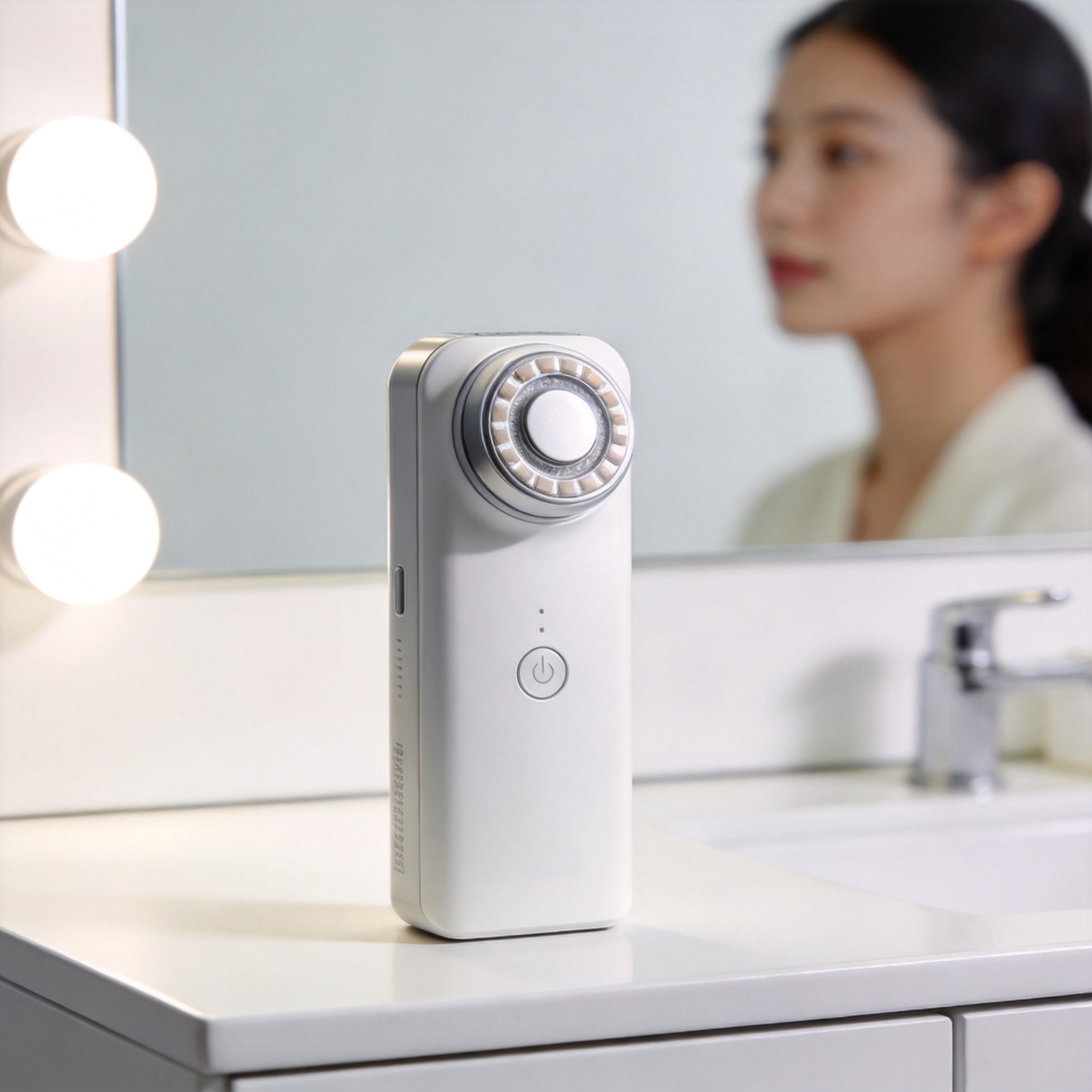
Portable beauty devices have moved from a niche novelty to a practical part of many at-home beauty routines. The appeal is not that a compact tool can replace every professional service. It is that it gives people a more flexible way to support familiar skincare habits between appointments, at a pace that fits real life. A small LED device, facial cleansing tool, cooling wand, or microcurrent-style tool can be stored nearby, charged easily, and used without rearranging the day.
For brands and buyers, the shift is worth understanding. Modern beauty consumers do not only compare feature lists. They ask a simpler question: will this device be easy enough, comfortable enough, and clear enough to use consistently? Portability is increasingly the answer to that question.
People already manage crowded routines. Work, travel, family responsibilities, and changing schedules make appointment-based care difficult to maintain. Portable beauty devices remove some of that friction by bringing a focused step into the home, hotel room, or travel bag. A short beauty beauty session can feel more realistic than a treatment that requires booking, commuting, and recovery time.
That practicality also changes how beauty shoppers judge value. Many consumers are less interested in owning the most complicated device than in having one they can use regularly. A compact format, intuitive controls, straightforward charging, and easy cleaning can matter as much as an impressive-looking specification sheet. In other words, repeatable use is often more valuable than an ambitious routine that is abandoned after a week.
Beauty search-market research reflects this preference for manageable formats. One market-report search result describes portable and handheld devices as a leading skincare-device segment and links that position to convenience and affordability. The exact scope and methodology should be checked before relying on any market figure, but the direction is consistent with everyday consumer behavior: beauty routines increasingly need to work around life, rather than demand that life work around them.
Portable devices give users more control over timing, surroundings, and beauty routine order. Someone may use a cooling tool after a long day, choose an LED session while reading, or reserve a gentle cleansing step for travel. That sense of control is particularly attractive to people who prefer to build a routine gradually instead of committing to a single major treatment.
There is an important distinction here. Home beauty devices are not a promise of identical results for every person or a substitute for professional advice when a skin concern needs clinical attention. Skin condition, sensitivity, product compatibility, and consistent correct use all affect the experience. Still, the ability to choose when to use a device makes personal care feel less like an obligation and more like a habit people can sustain.
For manufacturers, this favors human-centered product decisions: a comfortable grip, clear mode labels, a sensible session timer, and instructions that explain what to expect. A strong portable experience is often quiet and uncomplicated. If users must keep checking a manual to understand the controls, portability alone will not create loyalty.
Beauty consumers now encounter terms such as LED light, microcurrent, warming, cooling, and ultrasonic vibration across retailer pages, social content, and product reviews. Greater awareness does not mean that every claim is understood correctly, but it does make people more willing to explore a device category. Compact designs make these technologies feel less intimidating than large salon equipment.
Brands should respond with beauty education rather than hype. Explain the intended cosmetic-care role of a feature, the recommended routine, and the limitations of use. For example, a light-based device may be positioned as part of an at-home skincare routine, while a microcurrent-style device may be framed around a gentle maintenance experience. Neither description should become a medical claim or a guarantee.
This is where clear communication supports trust. Buyers evaluating portable beauty products should look for instructions that state session frequency, contraindications where relevant, cleaning steps, and realistic care expectations. The U.S. FDA’s consumer-device guidance emphasizes the importance of safe and effective use in the home; that is a useful design principle even when a product is marketed in another region.
Portable beauty devices are easy to demonstrate in short-form content because the use case is visible: unbox the device, show how it fits in a routine, explain charging, and show the steps. This does not prove performance, but it helps a potential beauty user picture whether the tool belongs in their own day. Compared with a treatment that happens behind a clinic door, an at-home device is more accessible to discuss, compare, and share.
That visibility raises the bar for beauty product communication. A brand that relies only on dramatic before-and-after language may gain attention but lose credibility. A better approach is to show the routine, identify who may enjoy the format, and be candid about what requires patience. Many shoppers appreciate a brand that says, in effect, “this is designed for regular cosmetic care, not instant transformation.”
Beauty mobility is not only about vacations. Hybrid work, frequent overnight stays, gym routines, and small living spaces all reward products that do not demand a dedicated cabinet or complicated setup. A portable beauty device can be easier to store, carry, and maintain than a larger unit. For people trying to reduce clutter, one adaptable tool may be more attractive than several single-purpose products.
Travel-friendly beauty design should still be evaluated carefully. Battery handling, charging compatibility, durable materials, protective storage, and cleanability all influence whether a beauty product is genuinely convenient away from home. A compact product that leaks, is difficult to sanitize, or has unclear power guidance creates the opposite of convenience.
Portable beauty is not simply a smaller version of salon equipment. It is a product category shaped by everyday behavior. A user needs to understand the beauty device in a few moments, fit it beside existing skincare, and know when to stop. That is why thoughtful beauty design often favors a limited set of well-explained functions over an overloaded interface.
For retail and brand teams, this creates a useful evaluation lens. Does the beauty device have an obvious purpose? Can the user tell how to prepare, use, clean, and store it? Are claims aligned with the actual cosmetic-care role? When the answers are clear, portability becomes a credible benefit rather than a marketing label.
As interest in portable beauty tools grows, so does scrutiny. Users want to know whether a beauty device is appropriate for their skin, how it should be used, and when it should be avoided. This is reasonable. Sensitive skin, active irritation, recent procedures, and personal health considerations can change what is suitable. When in doubt, users should pause and seek advice from an appropriate qualified professional rather than push through discomfort.
For a portable beauty device, beauty credibility is built through useful details: understandable instructions, transparent cosmetic claims, thoughtful safety information, and quality controls that fit the intended market. For B2B buyers, it also means asking beauty suppliers about product documentation, testing pathways, labeling, and the support available for regional requirements. Certifications should not be assumed from a product category alone; they must be verified for the specific model and market.
Portable devices are gaining attention because they align with a broader change in beauty: consumers want beauty routines that are flexible, understandable, and realistic to repeat. The winning product is not necessarily the one with the longest list of modes. It is the one that makes a useful routine easier to maintain while respecting safety and expectation boundaries.
For beauty shoppers, the practical checklist is simple: define the routine goal, check whether the device feels manageable to use, read the instructions in full, and avoid claims that sound too absolute. For brands, the opportunity is equally clear. Design portable beauty devices around real routines, explain them responsibly, and make trust part of the beauty product experience rather than an afterthought.

2026/10/30
Discover why in-house mold development helps an RF beauty device manufacturer improve product consistency, iteration speed, tooling control, and production readiness.

2026/10/30
Learn how to verify an RF beauty device manufacturer's R&D and prototyping capabilities using practical engineering workflows and audit checklists.

2026/10/30
Learn what shapes MOQ when choosing an RF beauty device manufacturer and how to plan a lower-risk first order with balanced platform and customization.

2026/10/30
Use this RF beauty device manufacturer evaluation checklist to compare safety evidence, OEM and ODM capability, quality control, and launch readiness.

2026/10/30
See how technology makes beauty at home more guided, consistent, and informed—plus a practical checklist for choosing devices wisely.

2026/10/30
Explore how AI and smart devices shape the future of beauty with responsive routines, clear guidance, trustworthy design, and user-controlled care.

Ideal for daily facial care routines, providing easy-to-use beauty solutions at home.

Perfect for spas and salons’ frequent treatments, enhancing client experiences and results.

Supports dermatologists with advanced devices for professional skin therapy sessions.

Delivers innovative solutions for full-body massage and relaxation with home devices.

Features anti-aging technologies to help reduce wrinkles and stimulate skin vitality.

Specialized devices for safe and effective hair removal suitable for home or clinic use.

Our customers love the Perfect Idea beauty devices. Quality, packaging, and results are all outstanding. We saw increased repeat sales after adding their facial cleansers to our lineup. Their support team is responsive and reliable.

Perfect Idea brings innovation and reliability to home beauty appliances. Our collaboration introduced their massage tools to Japanese women, boosting customer satisfaction and growing our brand trust across the region.

We partnered with Shenzhen Perfect Idea Tech for their beauty equipment. The shipping was fast and every product matched our expectations. Their home-use massagers are especially popular with local salons and home users.

The stylish packaging and attractive design make Perfect Idea stand out. French consumers appreciate the easy instructions and visible results. Communication was efficient and orders always arrived on time.

Perfect Idea home use personal care devices have become a favorite with our clients. The beauty device line offers quality at a reasonable price, and technical training for our staff made onboarding easy.

We selected Perfect Idea for our beauty product portfolio and have seen very positive feedback from our customers. Products are easy to market online and the customer support is reliable and helpful.
