 EN
Home Skincare
Ideal for daily facial care routines, providing easy-to-use beauty solutions at home.

2026/10/13
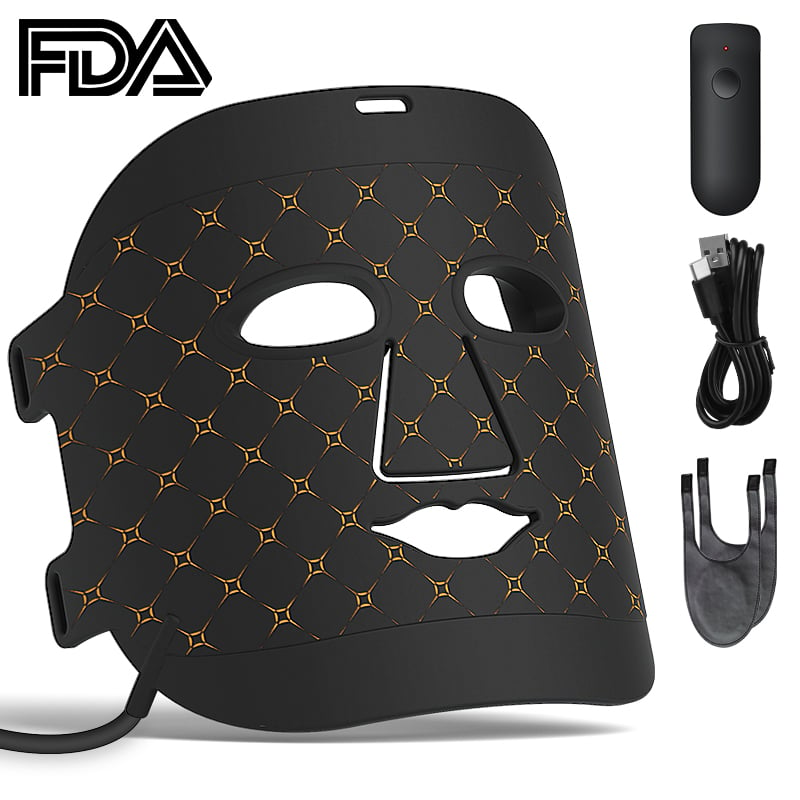
A red light therapy panel with many closely spaced LEDs can look more capable than a sparse array. The useful distinction is a little more precise: density does not magically make photons travel farther through tissue. Wavelength and tissue optics do most of that work. What a well-designed high-density panel can do is deliver a more even, better-supported dose at the skin surface across a practical treatment area. That gives suitable red and near-infrared light a better starting point before normal absorption and scattering reduce it on the way to deeper tissue.
As a technical adviser for home beauty-device selection, I would start with the treatment target rather than the LED count. A panel intended for surface-focused skin care and one intended to support a larger muscle-recovery routine should not be judged by exactly the same shorthand. The right question is: does the device document the wavelengths, irradiance at a stated distance, coverage pattern, controls, and session guidance needed for the intended use?
Light does not move through skin, fat, muscle, and connective tissue as though those layers were clear glass. It is absorbed and scattered, and the rate of attenuation changes with wavelength, tissue composition, skin characteristics, and the distance from the panel. In photobiomodulation research, red and near-infrared bands are commonly considered because this region can pass through tissue more readily than many shorter visible wavelengths. Near-infrared light is often selected when the intended target is deeper than the surface.
That still does not create a universal depth number. The amount of energy that reaches a target depends on the person and the target, as well as wavelength, irradiance, exposure time, beam geometry, and the distance between the panel and the body. A responsible red light therapy panel should be discussed as a dose-delivery system, not as a device that guarantees the same depth or outcome for every user.
Every LED produces a beam with a distribution rather than a perfectly flat column of light. When emitters are spaced far apart, the strongest areas can sit directly in front of individual LEDs while lower-intensity gaps appear between them, especially at closer distances. A high-density layout can create more overlap between neighboring beams. With suitable optics and drive design, that overlap can smooth the irradiance map across the body area being treated.
This is the main practical advantage. If one part of the target area repeatedly receives a weak dose, adding time may not correct the unevenness; it may simply overexpose the already bright areas. A denser, well-engineered array can reduce that compromise and make session positioning less fussy.
A large array with close emitter spacing can maintain more consistent output over a broader footprint. For a user treating a shoulder, thigh, back, or another wide area, that may mean fewer repositioning steps and fewer untreated seams between sessions. Consistency matters because a practical routine is more likely to be followed than a complicated one.
Density alone is not enough here. Panel dimensions, beam angle, reflector or lens design, mounting position, and the stated measurement distance all affect the area that receives a useful dose. Two panels with the same LED count can therefore behave differently if their layouts and optics differ.
At a given distance, more emitters may allow a panel to maintain meaningful irradiance over its intended coverage area. That can matter because only a fraction of the surface-delivered light remains after tissue attenuation. In other words, a more even surface dose may improve the odds that a relevant amount of selected wavelength reaches a deeper target. It is not proof of a particular clinical effect, and it is not a substitute for choosing an appropriate wavelength mix.
The phrase “high-density LEDs penetrate deeper” is an understandable shortcut, but it combines separate mechanisms. Penetration is chiefly constrained by tissue optics and wavelength. Dose delivery at the surface is shaped by irradiance, coverage, distance, and time. A dense panel can help with the second group of factors; it cannot override the first.
Consider a dense array that uses an unsuitable spectrum, runs too hot, or provides no measured irradiance data. Its LED count would not tell you how much usable energy reaches a target. Conversely, a less dense but carefully designed red light therapy panel may perform well for a smaller treatment area if its wavelength selection, measurement method, and positioning guidance are transparent.
For mixed skin and deeper-tissue-oriented applications, product discussions commonly distinguish visible red wavelengths from near-infrared wavelengths. Red light is often used for more superficial targets, while near-infrared is commonly included when a deeper target is intended. The exact wavelength mix should be clearly disclosed; “red light” on a product page is not enough information by itself.
Then check irradiance, preferably with the test distance and measurement method stated. Irradiance describes power arriving per unit area, while fluence is the accumulated energy per unit area over time. A panel may look bright yet provide an uneven or poorly documented dose. It is also important not to assume that more output is inherently better. Photobiomodulation research describes a biphasic dose response: changing intensity or session length beyond an appropriate range may not improve the response and may be counterproductive for a given use case.
That is why a timer and adjustable intensity are functional design features, not just conveniences. They allow a routine to be matched to the maker’s guidance and adjusted conservatively rather than turning every session into a maximum-output test.
For brands developing a red light therapy panel, density should be part of an engineering brief rather than a headline number. The design goal is a balanced system: selected red and near-infrared wavelengths, repeatable irradiance across the claimed footprint, manageable heat, intuitive controls, and honest instructions about distance and time. For international buyers, documentation and market-specific compliance review should also be handled before a performance claim reaches packaging or a product page.
For consumers, the takeaway is simpler. A high-density panel can be preferable when it produces smoother coverage and practical dose delivery over the area you actually plan to treat. Compare the evidence behind the layout, not only the number of LEDs. If a manufacturer cannot explain its wavelengths, measured output, coverage, and safe-use guidance, a high LED count should not fill in the missing information.
High-density LED layouts can make a red light therapy panel better at supporting deep-tissue-oriented use because they can reduce low-output gaps and deliver a more uniform starting dose across a useful area. The deeper reach itself remains dependent on wavelength and the way tissue attenuates light. Choose a panel by looking at the complete system—spectrum, measured irradiance, coverage, distance, controls, and instructions—rather than treating density as a stand-alone promise.

2026/10/30
Discover why in-house mold development helps an RF beauty device manufacturer improve product consistency, iteration speed, tooling control, and production readiness.

2026/10/30
Learn how to verify an RF beauty device manufacturer's R&D and prototyping capabilities using practical engineering workflows and audit checklists.

2026/10/30
Learn what shapes MOQ when choosing an RF beauty device manufacturer and how to plan a lower-risk first order with balanced platform and customization.

2026/10/30
Use this RF beauty device manufacturer evaluation checklist to compare safety evidence, OEM and ODM capability, quality control, and launch readiness.

2026/10/30
See how technology makes beauty at home more guided, consistent, and informed—plus a practical checklist for choosing devices wisely.

2026/10/30
Explore how AI and smart devices shape the future of beauty with responsive routines, clear guidance, trustworthy design, and user-controlled care.

Ideal for daily facial care routines, providing easy-to-use beauty solutions at home.

Perfect for spas and salons’ frequent treatments, enhancing client experiences and results.

Supports dermatologists with advanced devices for professional skin therapy sessions.

Delivers innovative solutions for full-body massage and relaxation with home devices.

Features anti-aging technologies to help reduce wrinkles and stimulate skin vitality.

Specialized devices for safe and effective hair removal suitable for home or clinic use.

Our customers love the Perfect Idea beauty devices. Quality, packaging, and results are all outstanding. We saw increased repeat sales after adding their facial cleansers to our lineup. Their support team is responsive and reliable.

Perfect Idea brings innovation and reliability to home beauty appliances. Our collaboration introduced their massage tools to Japanese women, boosting customer satisfaction and growing our brand trust across the region.

We partnered with Shenzhen Perfect Idea Tech for their beauty equipment. The shipping was fast and every product matched our expectations. Their home-use massagers are especially popular with local salons and home users.

The stylish packaging and attractive design make Perfect Idea stand out. French consumers appreciate the easy instructions and visible results. Communication was efficient and orders always arrived on time.

Perfect Idea home use personal care devices have become a favorite with our clients. The beauty device line offers quality at a reasonable price, and technical training for our staff made onboarding easy.

We selected Perfect Idea for our beauty product portfolio and have seen very positive feedback from our customers. Products are easy to market online and the customer support is reliable and helpful.
