 EN
Home Skincare
Ideal for daily facial care routines, providing easy-to-use beauty solutions at home.

2026/10/28
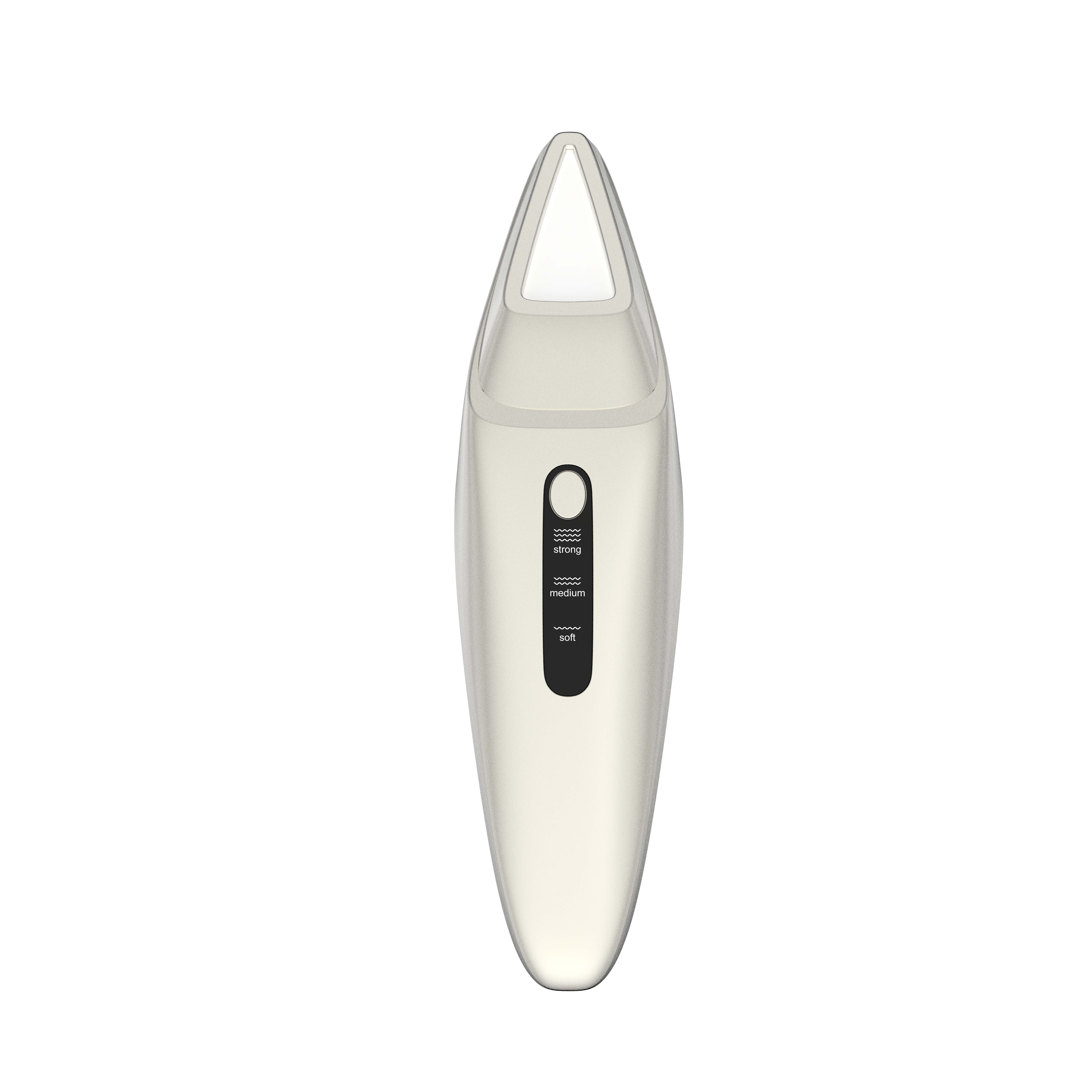
There is no single RF frequency that is automatically preferable for every collagen RF treatment device. A more useful answer is that the right frequency is the one validated within a complete energy-delivery system: electrode design, treatment area, power control, contact quality, temperature management, treatment time, and intended user all matter. Frequency helps shape how radiofrequency energy behaves in tissue, but it does not prove that a device will deliver a safe, comfortable, or consistent collagen-supporting treatment on its own.
As a technical advisor evaluating home beauty devices, I would not approve a collagen RF treatment device from a frequency figure alone. Published RF systems use different architectures—examples in the literature include 1 MHz designs and dual-frequency platforms using 2 MHz and 6.78 MHz. That range is a reminder that “optimal” is a design-and-validation question, not a one-number shopping rule.
RF devices create heat by passing alternating electrical energy through tissue resistance. In a collagen-focused treatment, the practical aim is controlled, repeatable dermal heating rather than a dramatic sensation on the skin surface. Frequency is one input that influences the electrical behavior of the system, but the clinical or consumer experience also depends on impedance, electrode size and spacing, coupling medium, energy waveform, movement pattern, and the ability to maintain safe contact.
A lower or higher MHz label therefore cannot be read as a simple depth meter. In real products, tissue response is shaped by the complete handpiece and treatment protocol. For example, a dual-frequency system may use 2 MHz and 6.78 MHz to support depth-dependent heating across dermal and subdermal planes, while another design may use a single frequency with different electrode geometry and feedback controls. Neither approach is inherently superior without validation for its intended treatment zone.
For noninvasive aesthetic RF, frequencies around the low-MHz range are common in the broader market, and 1 MHz, 2 MHz, and 6.78 MHz are all seen in published or commercial-system discussions. That does not create a universal frequency recommendation. A collagen RF treatment device intended for a small facial area, for instance, needs a different balance of contact control and comfort than a larger body handpiece or a professional multi-electrode system.
In other words, do not ask only, “Is 6.78 MHz better than 2 MHz?” Ask what the system was engineered to do at that frequency. The meaningful questions are whether the design can deliver stable energy over uneven facial contours, limit hot spots, accommodate changes in skin impedance, and guide the user to a repeatable protocol.
For product development and B2B sourcing, an optimal RF setting for a collagen RF treatment device is the setting that meets five conditions together:
This is where early evaluations often need a correction. It is tempting to treat a higher technical number as a stronger product story; more accurately, a usable device is one that makes controlled treatment easy to repeat. Comfort, contact, and sensible safeguards can matter more to day-to-day adherence than a headline frequency alone.
A home-use collagen RF treatment device should not simply copy a professional frequency specification. A collagen RF treatment device positioned for home care needs its own conservative engineering and validation rationale. Consumer devices generally need a more conservative operating envelope, clear instructions, user-facing controls, and safeguards suited to non-professional use. Professional systems may use different applicators, protocols, monitoring, operator training, and regulatory controls. The intended use—not marketing ambition—should set the design brief.
For a home RF device, buyers considering a collagen RF treatment device should review how the product handles conductive gel or another approved coupling approach, whether contact is detected consistently, how it responds to poor contact or abnormal heat, and how users are told to avoid compromised skin, contraindicated conditions, or areas outside the instructions. A product team should have its regulatory and clinical experts assess market-specific requirements before making collagen-related claims.
| Question to ask | Why it matters |
|---|---|
| What treatment area and intended use does this frequency support? | Frequency should be evaluated in the context of the handpiece, area, protocol, and target user. |
| Is the RF monopolar, bipolar, multipolar, or another configuration? | Electrode arrangement changes the energy path and cannot be separated from the frequency discussion. |
| How are output and contact managed? | Consistency depends on controls, sensing, and user feedback—not on MHz alone. |
| What testing supports thermal safety and repeatability? | Documented validation is more decision-useful than a standalone performance claim. |
| How are claims and instructions localized? | Market rules and user expectations affect labeling, safety language, and substantiation needs. |
This is the most common error. A frequency number can be relevant, but it cannot show whether the collagen RF treatment device controls heat uniformly or performs as intended on real skin contours. The purchasing review for a collagen RF treatment device should therefore include testing and control evidence.
A warm sensation is not a quality metric. Uncomfortable heat, persistent redness, or poor contact should be treated as reasons to stop and review the instructions, not as proof that the device is “working harder.”
RF product content should describe the intended cosmetic context carefully. Avoid presenting a consumer beauty device as a substitute for medical diagnosis or treatment, and ensure claims are reviewed for the target market.
Specify the use case first, then review frequency as part of the engineering package. For a facial home-use program, request the RF architecture, electrode drawings, output-control method, contact and thermal safeguards, treatment protocol, test evidence, labeling plan, and claim-substantiation approach. If a supplier answers only with a frequency figure, the evaluation is incomplete.
The manufacturer can support an ODM/OEM development approach that helps brands align functional configuration, industrial design, instructions, and market-facing documentation. Final specifications and claims should be confirmed through the appropriate engineering, safety, regulatory, and market-review process.
The optimal RF frequency for a collagen RF treatment device is not a universal number. Low-MHz and dual-frequency designs can each be appropriate when they are matched to the intended treatment area and supported by controlled delivery, thermal safeguards, repeatable instructions, and credible validation. Choose the complete system—not the MHz label—and use qualified technical and regulatory review before launch.
No single frequency is right for every device. 6.78 MHz is used in some RF architectures, but suitability depends on the complete system design, intended use, electrode configuration, output control, and validation.
It may use a similar frequency, but that does not make the products equivalent. Home and professional devices can differ substantially in applicator design, safeguards, protocols, user training, and regulatory controls.
Verify the intended-use specification, RF architecture, contact and thermal controls, test documentation, instructions, claims substantiation, and market-specific compliance pathway for the collagen RF treatment device. Frequency should be reviewed as one part of that package.

2026/10/30
Discover why in-house mold development helps an RF beauty device manufacturer improve product consistency, iteration speed, tooling control, and production readiness.

2026/10/30
Learn how to verify an RF beauty device manufacturer's R&D and prototyping capabilities using practical engineering workflows and audit checklists.

2026/10/30
Learn what shapes MOQ when choosing an RF beauty device manufacturer and how to plan a lower-risk first order with balanced platform and customization.

2026/10/30
Use this RF beauty device manufacturer evaluation checklist to compare safety evidence, OEM and ODM capability, quality control, and launch readiness.

2026/10/30
See how technology makes beauty at home more guided, consistent, and informed—plus a practical checklist for choosing devices wisely.

2026/10/30
Explore how AI and smart devices shape the future of beauty with responsive routines, clear guidance, trustworthy design, and user-controlled care.

Ideal for daily facial care routines, providing easy-to-use beauty solutions at home.

Perfect for spas and salons’ frequent treatments, enhancing client experiences and results.

Supports dermatologists with advanced devices for professional skin therapy sessions.

Delivers innovative solutions for full-body massage and relaxation with home devices.

Features anti-aging technologies to help reduce wrinkles and stimulate skin vitality.

Specialized devices for safe and effective hair removal suitable for home or clinic use.

Our customers love the Perfect Idea beauty devices. Quality, packaging, and results are all outstanding. We saw increased repeat sales after adding their facial cleansers to our lineup. Their support team is responsive and reliable.

Perfect Idea brings innovation and reliability to home beauty appliances. Our collaboration introduced their massage tools to Japanese women, boosting customer satisfaction and growing our brand trust across the region.

We partnered with Shenzhen Perfect Idea Tech for their beauty equipment. The shipping was fast and every product matched our expectations. Their home-use massagers are especially popular with local salons and home users.

The stylish packaging and attractive design make Perfect Idea stand out. French consumers appreciate the easy instructions and visible results. Communication was efficient and orders always arrived on time.

Perfect Idea home use personal care devices have become a favorite with our clients. The beauty device line offers quality at a reasonable price, and technical training for our staff made onboarding easy.

We selected Perfect Idea for our beauty product portfolio and have seen very positive feedback from our customers. Products are easy to market online and the customer support is reliable and helpful.
