 EN
Home Skincare
Ideal for daily facial care routines, providing easy-to-use beauty solutions at home.

2026/10/14
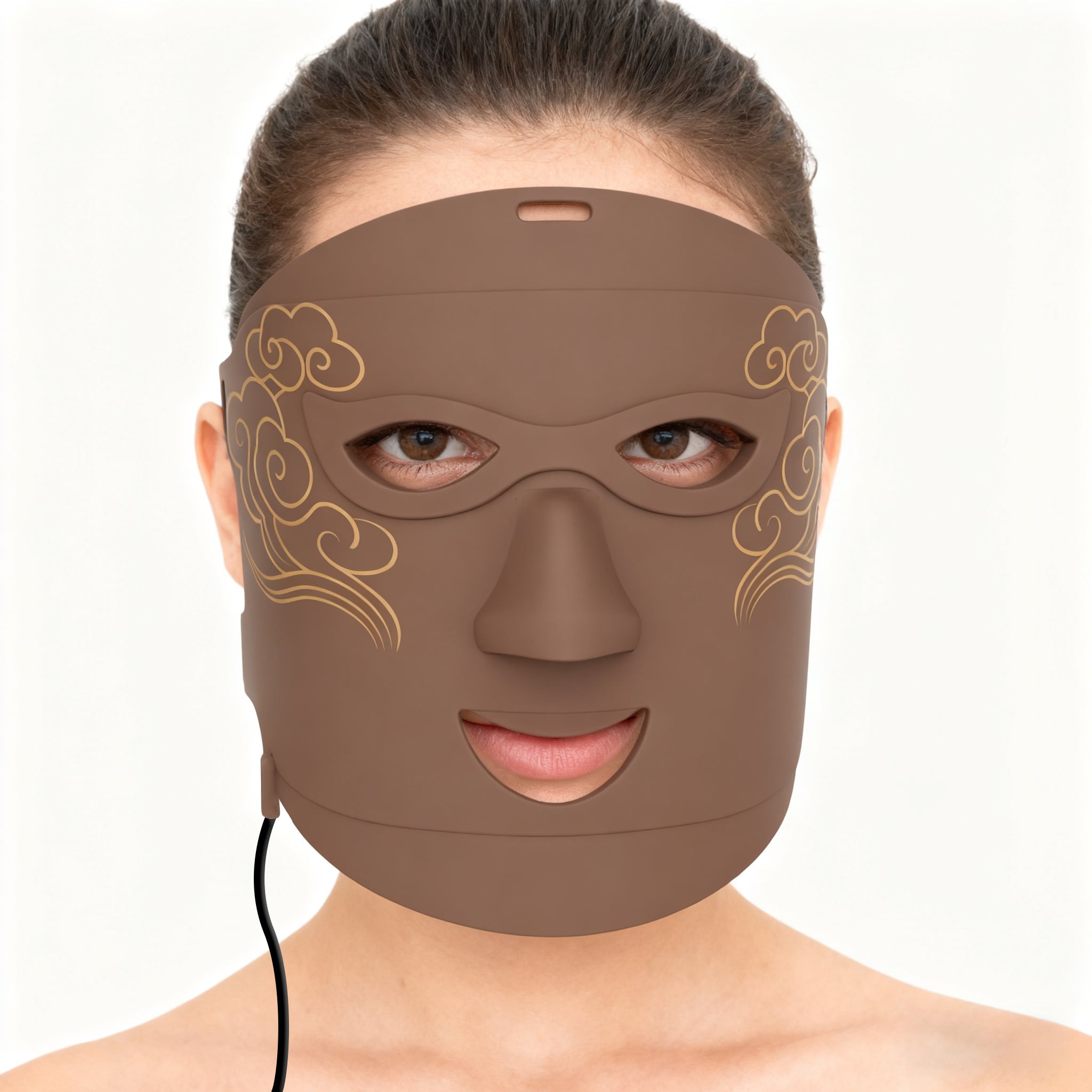
Choosing an LED mask often looks like a question about color settings or the number of diodes. In day-to-day use, though, the shell material can be just as important. Hard-shell and silicone designs deliver light in different physical formats: one is structured and keeps its shape; the other is soft and conforms to the face. Neither construction is automatically better. The better LED mask is the one whose fit, routine, safety features, and treatment specifications make sense for the person who will actually use it.
As a practical skin-device comparison, this article keeps the distinction clear: material affects comfort, positioning, cleaning, storage, and user preference. It does not by itself prove a mask is more powerful, safer, or more effective. Those conclusions require a look at the individual device and its instructions.
| Consideration | Hard-shell LED mask | Silicone LED mask |
|---|---|---|
| Construction | Rigid molded body that holds a fixed shape. | Flexible, soft body that can bend around facial contours. |
| Face feel | May rest on the forehead, nose bridge, or straps rather than sit flush everywhere. | Usually feels lighter and closer to the skin, although straps and cutouts still determine comfort. |
| Fit consistency | The shape is stable, so placement can be repeatable if it fits the user well. | Can accommodate more face shapes, but should be secured so it does not shift during a session. |
| Storage and travel | Needs more room and protection from impact. | Often packs more easily because it can lie flatter. |
| Cleaning | Usually simple to wipe; inspect seams, eye pieces, and strap attachments. | Also wipeable, but take care not to crease, puncture, or leave residue in folds. |
| Helpful starting point | Someone who likes a stable, structured device and whose face fits its contours. | Someone prioritizing a lightweight feel, close contact, or portability. |
A hard-shell LED mask has a molded frame. This LED mask format usually has a fixed contour around the cheeks, nose, and forehead. Its advantage is structural consistency. It does not collapse in a drawer, and a user who fits its shape can position it in a familiar way every time. For some people, that predictable geometry feels reassuring, especially when the mask is used while sitting still rather than moving around.
The trade-off is that faces are not molded to one template. A rigid edge can leave a gap at the cheeks or press on the bridge of the nose. This does not mean every hard-shell design is uncomfortable; the details matter. Weight, strap placement, eye cutouts, ventilation, and whether the device rests on contact points all change the experience. A mask that feels fine for a five-minute test may feel distracting through a full recommended session.
Hard shells can also appeal to users who prefer a device that stays separated from skincare products or makeup residue. Still, a hover-style or rigid design is not automatically more even in light delivery. Check how the manufacturer specifies treatment distance, intended positioning, and session duration instead of assuming the shell is the deciding factor.
A silicone LED mask is designed to flex, and this LED mask style can follow facial contours. Because the material is soft and usually lighter, many users find it easier to wear lying down or to pack for travel. The closer, more adaptable feel can be especially appealing when a rigid mask presses at the temples or nose.
But flexibility is not a universal win. A soft mask can shift if straps are loose, and a very close fit may feel warm or claustrophobic to some users. Hair, ears, lashes, and the shape of the eye opening all matter. The useful question is not “Does silicone touch the skin?” but “Can I place and secure this device comfortably in the way its instructions require?”
Silicone also asks for sensible care. Wipe the surface after use according to the manual, avoid harsh cleaners that the manufacturer does not approve, and store it without sharp bends or heavy objects on top. Keeping the material clean and undamaged helps preserve the experience of using the LED mask; it is not a substitute for checking the device’s light specifications.
Not on its own. The light output of an LED mask depends on the device’s LEDs, wavelengths, irradiance, treatment geometry, controls, and protocol. Any LED mask comparison should evaluate those factors. Shell material is only one part of the delivery setup. A comfortable silicone design may encourage regular LED mask sessions, while a well-fitting hard shell may make positioning easy to repeat. Those are practical advantages, not proof of superior clinical performance.
When comparing two masks, look beyond “hard” or “soft” and ask for the information that is actually comparable:
That checklist helps prevent a common mistake: treating a softer feel or a more substantial casing as evidence that one model must be more capable. It may be more suitable for a particular routine, but the technical information should carry the performance comparison.
Here is the part buyers sometimes underestimate. An LED mask can look impressive on a product page and still spend most of its life in a drawer if it is heavy, pinches, slips, or is awkward to store. The most useful LED mask routine is one the user can follow at the recommended frequency without forcing it.
For example, someone with a narrow nose bridge may tolerate a soft mask better because it distributes contact differently. Another person may prefer a rigid mask because its shape stays off sensitive areas. Neither response is unusual. If possible, review dimensions, weight, strap design, return terms, and the manual before purchase. For brand teams assessing a product line, fit testing across a range of face shapes is more informative than a single in-house trial.
A hard-shell or silicone LED mask should be used only as directed. Every LED mask needs device-specific safety guidance. Material does not remove the need to follow the treatment time, charging instructions, cleaning guidance, and eye-safety directions provided for that specific device. Avoid staring into LEDs, and use included or recommended eye protection when the manual calls for it.
People with a condition or medication that can increase photosensitivity, a relevant eye condition, recent procedures, or a history of skin reactions should seek individualized advice from a qualified clinician before starting light-based treatment. Stop use and consult an appropriate professional if discomfort, unusual irritation, visual symptoms, or another concerning reaction occurs. An at-home device is not a replacement for diagnosis or medical treatment.
The difference between hard-shell and silicone LED masks, and between one LED mask and another, is mainly a difference in structure and user experience. Hard shells offer a fixed, stable form; silicone masks emphasize flexibility, a lighter feel, and easier packing. Neither material alone determines how well an LED mask performs. Prioritize the fit on your face, the clarity of the device instructions, the safety features, and the routine you can realistically maintain. That approach makes the comparison more useful than choosing by shell material alone.

2026/10/30
Discover why in-house mold development helps an RF beauty device manufacturer improve product consistency, iteration speed, tooling control, and production readiness.

2026/10/30
Learn how to verify an RF beauty device manufacturer's R&D and prototyping capabilities using practical engineering workflows and audit checklists.

2026/10/30
Learn what shapes MOQ when choosing an RF beauty device manufacturer and how to plan a lower-risk first order with balanced platform and customization.

2026/10/30
Use this RF beauty device manufacturer evaluation checklist to compare safety evidence, OEM and ODM capability, quality control, and launch readiness.

2026/10/30
See how technology makes beauty at home more guided, consistent, and informed—plus a practical checklist for choosing devices wisely.

2026/10/30
Explore how AI and smart devices shape the future of beauty with responsive routines, clear guidance, trustworthy design, and user-controlled care.

Ideal for daily facial care routines, providing easy-to-use beauty solutions at home.

Perfect for spas and salons’ frequent treatments, enhancing client experiences and results.

Supports dermatologists with advanced devices for professional skin therapy sessions.

Delivers innovative solutions for full-body massage and relaxation with home devices.

Features anti-aging technologies to help reduce wrinkles and stimulate skin vitality.

Specialized devices for safe and effective hair removal suitable for home or clinic use.

Our customers love the Perfect Idea beauty devices. Quality, packaging, and results are all outstanding. We saw increased repeat sales after adding their facial cleansers to our lineup. Their support team is responsive and reliable.

Perfect Idea brings innovation and reliability to home beauty appliances. Our collaboration introduced their massage tools to Japanese women, boosting customer satisfaction and growing our brand trust across the region.

We partnered with Shenzhen Perfect Idea Tech for their beauty equipment. The shipping was fast and every product matched our expectations. Their home-use massagers are especially popular with local salons and home users.

The stylish packaging and attractive design make Perfect Idea stand out. French consumers appreciate the easy instructions and visible results. Communication was efficient and orders always arrived on time.

Perfect Idea home use personal care devices have become a favorite with our clients. The beauty device line offers quality at a reasonable price, and technical training for our staff made onboarding easy.

We selected Perfect Idea for our beauty product portfolio and have seen very positive feedback from our customers. Products are easy to market online and the customer support is reliable and helpful.
