 EN
Home Skincare
Ideal for daily facial care routines, providing easy-to-use beauty solutions at home.

2026/10/27
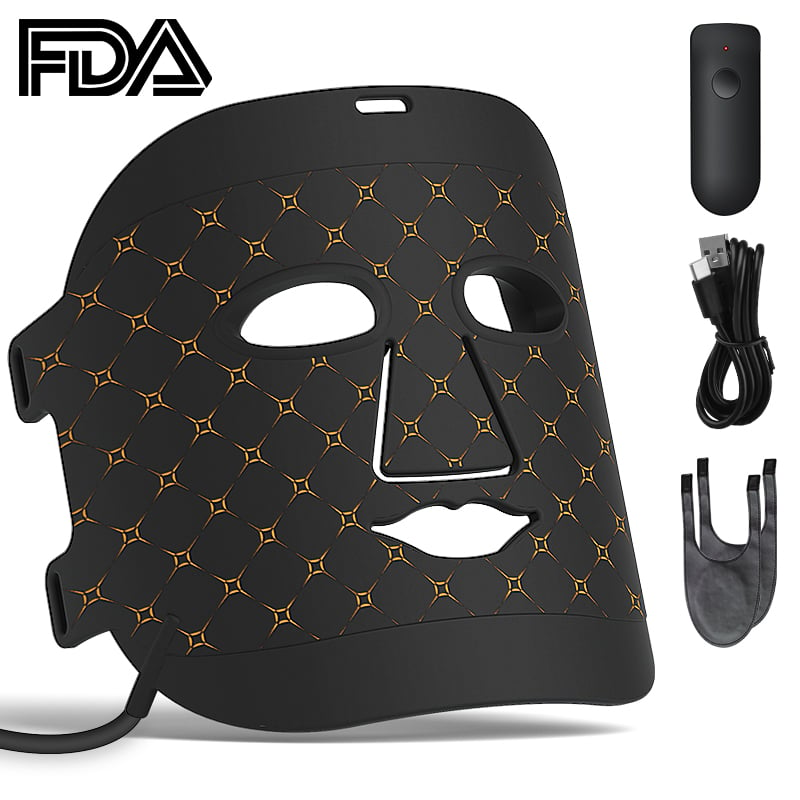
A silicone LED mask is often the more comfortable choice for a longer home-care session, but the material label alone does not settle the question. A well-designed hard-shell mask can feel secure and stable, while a poorly shaped flexible mask can still tug at the nose, press on the eye area, or slide when you move. The practical comparison is about how the mask distributes weight, follows facial contours, manages straps, and fits into a repeatable routine.
From an international beauty-device buyer’s perspective, comfort is not a cosmetic extra. It affects whether users complete the device-specific session as instructed, whether they keep the device in their weekly routine, and whether a brand receives avoidable fit complaints. This guide compares the two formats without treating either one as an automatic winner.
For people who find rigid edges distracting during a 10-to-20-minute routine, a silicone LED mask commonly has an advantage because flexible material can sit closer to changing facial contours rather than insisting that every face match one fixed curve. That can reduce localized pressure around the cheekbones, temples, and bridge of the nose. It may also make the mask less intimidating for a first-time wearer who wants to relax rather than sit perfectly still.
Still, “soft” is not synonymous with “comfortable.” Thickness, cutout shape, LED-module layout, strap placement, and control-cable routing can outweigh the basic material choice. A flexible mask that folds inward around the eyes or transfers all of its pull to a narrow strap will not feel comfortable simply because it is silicone.
| Comfort factor | Silicone LED mask | Hard-shell mask |
|---|---|---|
| Facial conformity | Usually adapts to more face shapes and can spread contact over a broader area. | Depends on the fixed mold; a good contour can feel stable, but mismatches are more noticeable. |
| Perceived weight | Often feels lighter when the electronics and straps are balanced. | May feel more substantial because the shell maintains its form, though actual weight varies by model. |
| Pressure points | Can reduce edge pressure, but soft material may bunch if the fit is poor. | Can create pressure at the nose, brow, or cheekbones when the geometry is wrong for the wearer. |
| Movement during use | Flexible fit can be forgiving when reclining, but straps must prevent shifting. | Rigid structure can stay aligned well when seated upright, yet may feel restrictive while moving. |
| Cleaning routine | Look for a smooth, wipeable surface and clear care instructions. | Look for seams and vents that are accessible without trapping residue. |
Long-session comfort is usually lost at a few small contact points, not across the whole face. A hard-shell design can concentrate load at the nose bridge if the shell is supported there. A silicone LED mask can spread contact more gently, but its straps still need to carry the mask without pulling the material into the eye area. When evaluating samples, ask testers to note the first place they want to adjust the mask. That observation is more useful than asking only whether the mask feels “good.”
A useful correction to a common buying assumption: a tighter fit is not necessarily a better fit. The goal is stable positioning without pinching, numbness, or a lingering mark. For users with sensitive skin or recent irritation, follow device instructions and pause use if the fit causes discomfort. Comfort cannot be separated from safe, tolerable use.
The most helpful comparison happens with the mask on. A silicone LED mask should have adjustable straps that hold it in place without lifting the lower edge or pulling against hair. Wide, soft strap contact is usually easier to tolerate than a thin strap that creates a single tension line. Check whether the adjustment range works for smaller and larger heads instead of assuming one default setting will suit every customer.
Eye openings deserve the same scrutiny. They should leave enough visual clearance for the intended use position and avoid pressing on lashes or orbital bone. If a wearer likes to recline, check whether the mask stays centered. If the intended routine is seated and hands-free, verify that the controller and cable do not pull the unit downward. These are small engineering details, but they are often the difference between a device users try once and a device they can keep using.
A hard-shell mask is not automatically less comfortable. Some users prefer the clear boundary and stable alignment of a rigid form, especially if it has thoughtful nose support, generous eye clearance, balanced mass, and padding where it contacts the face. A shell may also be easier for a brand to keep visually consistent across production runs because its geometry is fixed.
For this reason, brands should avoid positioning a silicone LED mask as universally superior. The stronger claim is narrower and more credible: flexible construction may better accommodate facial variation and reduce localized edge pressure, while a well-engineered hard-shell design can suit users who value a structured, stable feel.
For OEM or ODM development, this test gives the manufacturer and brand a shared language: pressure distribution, adjustment range, alignment stability, and cleanability. For an OEM or ODM project, a comfort brief can be translated into material, contour, strap, and packaging decisions rather than being left as a vague request for a “premium feel.”
If the priority is forgiving fit across a broad group of wearers, a silicone LED mask is often the stronger starting point for long sessions. If the priority is a defined structure and predictable alignment, a well-contoured hard-shell option can be appropriate. Neither choice should be approved from a catalog image alone. Require a wearer trial, check the fit under normal routine conditions, and make the final choice based on sustained comfort rather than a single first impression.
In short, a silicone LED mask tends to offer the more adaptable feel, while hard-shell comfort depends heavily on how accurately the mold, support points, and straps match the intended user. That is the comparison that leads to more reliable product decisions.

2026/10/30
Discover why in-house mold development helps an RF beauty device manufacturer improve product consistency, iteration speed, tooling control, and production readiness.

2026/10/30
Learn how to verify an RF beauty device manufacturer's R&D and prototyping capabilities using practical engineering workflows and audit checklists.

2026/10/30
Learn what shapes MOQ when choosing an RF beauty device manufacturer and how to plan a lower-risk first order with balanced platform and customization.

2026/10/30
Use this RF beauty device manufacturer evaluation checklist to compare safety evidence, OEM and ODM capability, quality control, and launch readiness.

2026/10/30
See how technology makes beauty at home more guided, consistent, and informed—plus a practical checklist for choosing devices wisely.

2026/10/30
Explore how AI and smart devices shape the future of beauty with responsive routines, clear guidance, trustworthy design, and user-controlled care.

Ideal for daily facial care routines, providing easy-to-use beauty solutions at home.

Perfect for spas and salons’ frequent treatments, enhancing client experiences and results.

Supports dermatologists with advanced devices for professional skin therapy sessions.

Delivers innovative solutions for full-body massage and relaxation with home devices.

Features anti-aging technologies to help reduce wrinkles and stimulate skin vitality.

Specialized devices for safe and effective hair removal suitable for home or clinic use.

Our customers love the Perfect Idea beauty devices. Quality, packaging, and results are all outstanding. We saw increased repeat sales after adding their facial cleansers to our lineup. Their support team is responsive and reliable.

Perfect Idea brings innovation and reliability to home beauty appliances. Our collaboration introduced their massage tools to Japanese women, boosting customer satisfaction and growing our brand trust across the region.

We partnered with Shenzhen Perfect Idea Tech for their beauty equipment. The shipping was fast and every product matched our expectations. Their home-use massagers are especially popular with local salons and home users.

The stylish packaging and attractive design make Perfect Idea stand out. French consumers appreciate the easy instructions and visible results. Communication was efficient and orders always arrived on time.

Perfect Idea home use personal care devices have become a favorite with our clients. The beauty device line offers quality at a reasonable price, and technical training for our staff made onboarding easy.

We selected Perfect Idea for our beauty product portfolio and have seen very positive feedback from our customers. Products are easy to market online and the customer support is reliable and helpful.
