 EN
Home Skincare
Ideal for daily facial care routines, providing easy-to-use beauty solutions at home.

2026/10/19
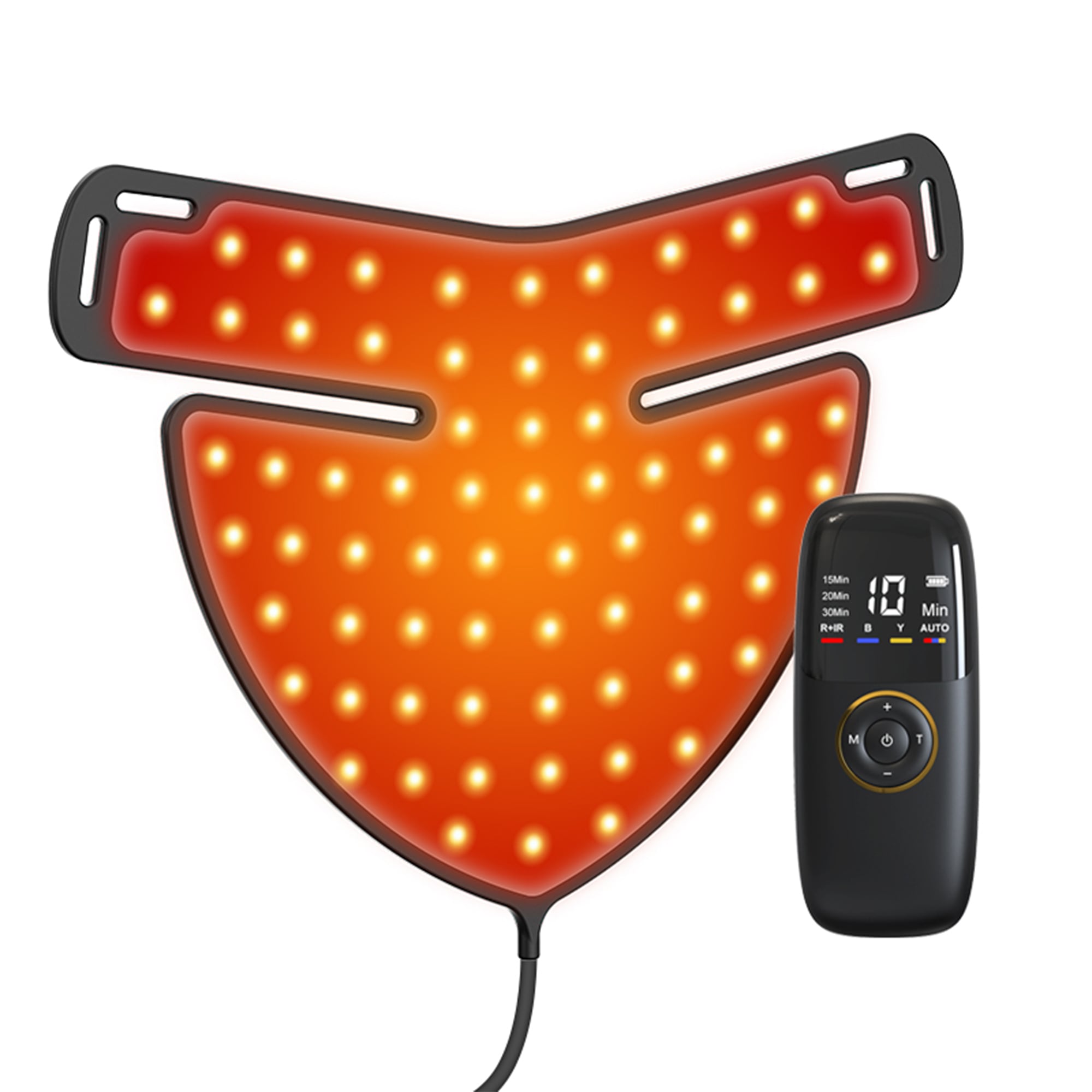
If coverage is your first concern, a red light therapy panel will usually cover more area in one session than a handheld device. That is the quick answer, but it is not the whole decision. The right format depends on whether you want to treat a broad region at once, work carefully around a small area, or build a routine that you will realistically repeat.
As a home-beauty device selection framework, start with the treatment area rather than a long feature list. A panel is designed to illuminate a wider field from a fixed position. A handheld unit is designed to move with you and concentrate attention on a smaller target. Neither format automatically delivers a better result; coverage, treatment distance, output disclosure, comfort, and the instructions for the specific device all matter.
A red light therapy panel is generally the more efficient choice for large or repeated treatment zones because its LEDs are arranged across a broader surface. Depending on the model and its recommended distance, one setup can illuminate part of the face, a large portion of the torso, the legs, or another broad region. The actual footprint changes with panel size, beam design, and how far away you stand or sit.
A handheld device has a much smaller illuminated footprint. It is better suited to a targeted routine: for example, moving slowly across a small facial zone or focusing on one localized area. It may take several placements to cover the same region that a panel can illuminate from one position. In other words, the usual trade-off is simple: a red light therapy panel reduces repositioning, while a handheld device gives you more placement control.
It is tempting to compare only the visible face of the device. That misses an important detail: light spreads as the distance changes. Moving farther from a panel can enlarge the illuminated area, but it can also change the light level reaching the skin. Moving closer can make the field smaller and may change comfort or positioning. Follow the manufacturer’s distance, session-time, and eye-safety instructions instead of creating a dose from a generic rule.
For this reason, ask each supplier for a treatment-footprint diagram or a clear description of the recommended distance and placement. A meaningful comparison should show the usable area at the stated treatment distance, not just a product photograph. If a brand publishes irradiance or fluence information, compare the measurement conditions as well; numbers taken at different distances are not directly interchangeable.
| Decision factor | Red light therapy panel | Handheld device |
|---|---|---|
| Typical treatment area | Broad areas in a fixed setup | Small, localized areas moved by hand |
| Session workflow | Less repositioning for a large region | More passes or placements for the same region |
| Placement control | More suitable when the area can face the panel comfortably | More suitable when you need to angle around a specific spot |
| Portability | Usually stays in one treatment space | Easy to carry, store, and use away from a setup |
| Key buying question | What documented area can it illuminate at its recommended distance? | Can its small footprint reach the specific area you plan to treat? |
Choose a red light therapy panel when your routine involves broad, repeatable areas and you value time efficiency. A panel can make more sense for a face-and-neck routine, a larger body region, or a shared household setup where several people will use the device in different positions. The key benefit is not that a panel is universally stronger; it is that it can cover more area without requiring you to trace every section by hand.
For a buyer evaluating an at home light therapy device, it also helps to consider where the panel will live. A stable stand, a chair, a clear wall area, and a convenient power location can affect whether the device becomes part of a routine. Mode counts often draw attention first. In day-to-day use, an easy position, sensible controls, and a repeatable schedule may matter more than options that rarely get used.
A handheld red light therapy device is often the practical choice when portability and precise placement matter more than speed. It can be easier to use around small contours, travel with, or store in a limited space. It also gives the user direct control over where the device is aimed, which can be helpful when a broad panel would illuminate more surrounding skin than desired.
The limitation is time. Covering a broad region with a handheld usually means dividing it into sections and following the device instructions for each placement. That is not necessarily a drawback if the intended use is genuinely localized. It becomes inconvenient when the buyer expects to treat a large area frequently and does not want a longer, more hands-on routine.
Coverage answers only one part of the buying question. Before selecting a red light therapy panel or a handheld format, request the information needed to compare like with like:
Visible red light and near-infrared light are common terms in photobiomodulation discussions, but their presence alone does not establish a particular benefit or suitability. Likewise, a regulatory claim must be verified for the exact device and indication. Keep the comparison grounded in the documentation for the model under consideration.
For product teams and private-label buyers, there is room for both formats. A red light therapy panel can serve a broader-coverage, at-home routine, while a compact handheld can address portability and targeted use. The strongest product story does not promise that one format solves every need. It explains the coverage trade-off clearly and gives the buyer the documentation needed to choose confidently.
A red light therapy panel usually covers more area than a handheld device because it illuminates a wider field with less repositioning. A handheld wins when precise placement and portability matter more than treating a broad region quickly. Compare the documented treatment footprint at the recommended distance, then weigh comfort, instructions, safety information, and your actual routine. That approach is more reliable than choosing by size, mode count, or marketing language alone.

2026/10/30
Discover why in-house mold development helps an RF beauty device manufacturer improve product consistency, iteration speed, tooling control, and production readiness.

2026/10/30
Learn how to verify an RF beauty device manufacturer's R&D and prototyping capabilities using practical engineering workflows and audit checklists.

2026/10/30
Learn what shapes MOQ when choosing an RF beauty device manufacturer and how to plan a lower-risk first order with balanced platform and customization.

2026/10/30
Use this RF beauty device manufacturer evaluation checklist to compare safety evidence, OEM and ODM capability, quality control, and launch readiness.

2026/10/30
See how technology makes beauty at home more guided, consistent, and informed—plus a practical checklist for choosing devices wisely.

2026/10/30
Explore how AI and smart devices shape the future of beauty with responsive routines, clear guidance, trustworthy design, and user-controlled care.

Ideal for daily facial care routines, providing easy-to-use beauty solutions at home.

Perfect for spas and salons’ frequent treatments, enhancing client experiences and results.

Supports dermatologists with advanced devices for professional skin therapy sessions.

Delivers innovative solutions for full-body massage and relaxation with home devices.

Features anti-aging technologies to help reduce wrinkles and stimulate skin vitality.

Specialized devices for safe and effective hair removal suitable for home or clinic use.

Our customers love the Perfect Idea beauty devices. Quality, packaging, and results are all outstanding. We saw increased repeat sales after adding their facial cleansers to our lineup. Their support team is responsive and reliable.

Perfect Idea brings innovation and reliability to home beauty appliances. Our collaboration introduced their massage tools to Japanese women, boosting customer satisfaction and growing our brand trust across the region.

We partnered with Shenzhen Perfect Idea Tech for their beauty equipment. The shipping was fast and every product matched our expectations. Their home-use massagers are especially popular with local salons and home users.

The stylish packaging and attractive design make Perfect Idea stand out. French consumers appreciate the easy instructions and visible results. Communication was efficient and orders always arrived on time.

Perfect Idea home use personal care devices have become a favorite with our clients. The beauty device line offers quality at a reasonable price, and technical training for our staff made onboarding easy.

We selected Perfect Idea for our beauty product portfolio and have seen very positive feedback from our customers. Products are easy to market online and the customer support is reliable and helpful.
