 EN
Home Skincare
Ideal for daily facial care routines, providing easy-to-use beauty solutions at home.

2026/10/16
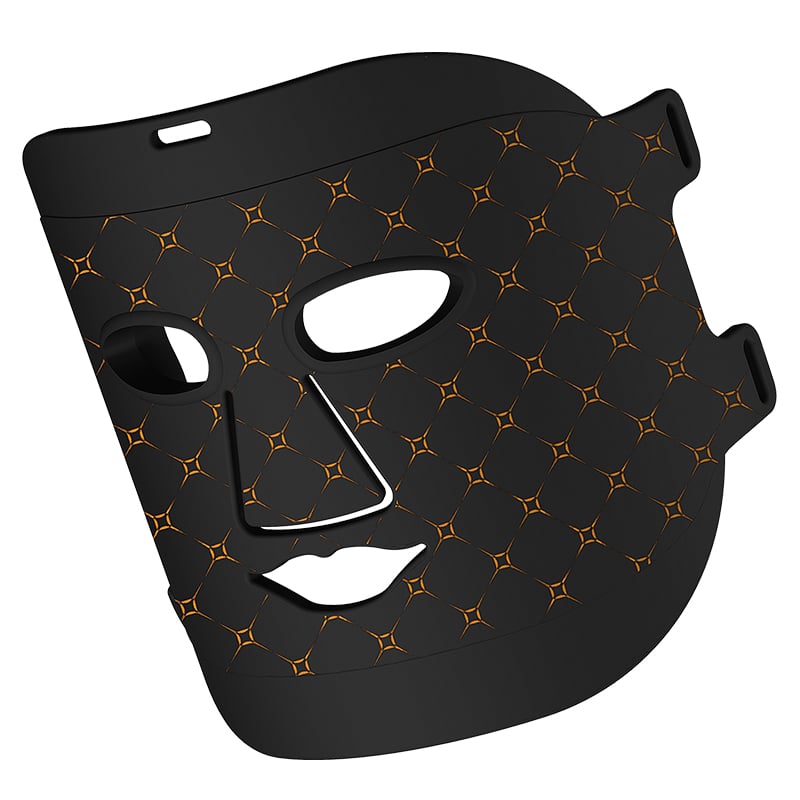
A red light mask is easy to find and harder to compare. Labels may show 630 nm, 633 nm, 660 nm, 830 nm, or 850 nm, but a longer list of numbers does not automatically make one device the right choice. Start with your intended routine, then assess the wavelength disclosure, fit, instructions, and safety information.
A red light mask can be part of an appearance-focused skincare routine, not a substitute for medical care. The useful question is not “Which number wins?” but “Does this device provide a transparent setup that I can use comfortably and as directed?”
Facial devices commonly distinguish visible red light from near-infrared (NIR) light. A peer-reviewed product-guide review describes visible red wavelengths commonly around 630–660 nm and NIR wavelengths commonly around 830–850 nm. A red light mask may list 633 nm or 660 nm for visible red and 830 nm or 850 nm for NIR. These ranges are useful comparison points, not guarantees of an individual outcome.
Visible red is the channel you can see. NIR is invisible and may be paired with visible red. If you want a straightforward facial routine, a red light mask with a clearly disclosed visible-red wavelength is a sensible starting point. If you prefer red plus NIR, check whether the channels run together or separately and whether the instructions explain why.
A the device should be assessed as a whole device. Wavelength tells you about the light band, but output, treatment time, distance from the skin, LED layout, and fit affect practical exposure. Two masks can state the same red wavelength yet feel very different in daily use.
A the device label does not reveal every relevant detail. “More power,” “more LEDs,” and “more colors” are not enough on their own. Check whether the brand describes the wavelength, operating mode, session plan, and safety boundaries. If those basics are unclear, a more elaborate specification list does not solve the information gap.
Many people change their priorities after comparing masks. A the device that pinches, slips, or feels difficult to clean may remain unused. A simpler option with a stable fit and a clear timer may be a more practical choice. Think about your actual evening routine rather than the ideal routine shown in advertising.
Use extra caution with any the device if you have diagnosed skin concerns, active irritation, unusual photosensitivity, an eye condition, or medication or prescription products with light-sensitivity warnings. Ask a qualified clinician before use in those situations. Stop using the device if discomfort occurs, and follow the maker’s stated limits rather than extending sessions on your own.
A cosmetic the device should not be described as a diagnosis, cure, or replacement for professional care. Responsible product information acknowledges that skin response and suitability vary. That restraint is a useful sign when comparing claims.
| Priority | What to compare |
|---|---|
| Simple facial routine | A the device with a clearly disclosed visible-red wavelength, timer, and comfortable fit. |
| Red plus NIR preference | A the device that explains how the two channels operate and gives usable session directions. |
| Extra colors | A the device with a specific explanation for each additional mode rather than a long, unexplained list. |
| Higher sensitivity concerns | A the device with accessible warnings and a plan to seek professional advice where appropriate. |
The most suitable the device is not necessarily the one with the most impressive wavelength list. Look for disclosed wavelengths, sensible instructions, comfortable fit, credible safety guidance, and claims that remain within reasonable limits. That comparison process gives you a clearer basis for selecting a the device that fits your needs.
Neither number automatically makes a consumer the device better. Both sit within commonly discussed visible-red ranges. Compare the complete device information, comfort, and instructions rather than choosing solely by a small wavelength difference.
A the device with NIR can be reasonable if you want that configuration and the brand clearly explains the mode. It is not a requirement for every buyer.
For any the device, look for exact wavelengths, operating-mode details, session directions, safety information, and accessible documentation. Vague spectrum language alone is less useful for comparison.

2026/10/30
Discover why in-house mold development helps an RF beauty device manufacturer improve product consistency, iteration speed, tooling control, and production readiness.

2026/10/30
Learn how to verify an RF beauty device manufacturer's R&D and prototyping capabilities using practical engineering workflows and audit checklists.

2026/10/30
Learn what shapes MOQ when choosing an RF beauty device manufacturer and how to plan a lower-risk first order with balanced platform and customization.

2026/10/30
Use this RF beauty device manufacturer evaluation checklist to compare safety evidence, OEM and ODM capability, quality control, and launch readiness.

2026/10/30
See how technology makes beauty at home more guided, consistent, and informed—plus a practical checklist for choosing devices wisely.

2026/10/30
Explore how AI and smart devices shape the future of beauty with responsive routines, clear guidance, trustworthy design, and user-controlled care.

Ideal for daily facial care routines, providing easy-to-use beauty solutions at home.

Perfect for spas and salons’ frequent treatments, enhancing client experiences and results.

Supports dermatologists with advanced devices for professional skin therapy sessions.

Delivers innovative solutions for full-body massage and relaxation with home devices.

Features anti-aging technologies to help reduce wrinkles and stimulate skin vitality.

Specialized devices for safe and effective hair removal suitable for home or clinic use.

Our customers love the Perfect Idea beauty devices. Quality, packaging, and results are all outstanding. We saw increased repeat sales after adding their facial cleansers to our lineup. Their support team is responsive and reliable.

Perfect Idea brings innovation and reliability to home beauty appliances. Our collaboration introduced their massage tools to Japanese women, boosting customer satisfaction and growing our brand trust across the region.

We partnered with Shenzhen Perfect Idea Tech for their beauty equipment. The shipping was fast and every product matched our expectations. Their home-use massagers are especially popular with local salons and home users.

The stylish packaging and attractive design make Perfect Idea stand out. French consumers appreciate the easy instructions and visible results. Communication was efficient and orders always arrived on time.

Perfect Idea home use personal care devices have become a favorite with our clients. The beauty device line offers quality at a reasonable price, and technical training for our staff made onboarding easy.

We selected Perfect Idea for our beauty product portfolio and have seen very positive feedback from our customers. Products are easy to market online and the customer support is reliable and helpful.
