 EN
Home Skincare
Ideal for daily facial care routines, providing easy-to-use beauty solutions at home.

2026/10/03
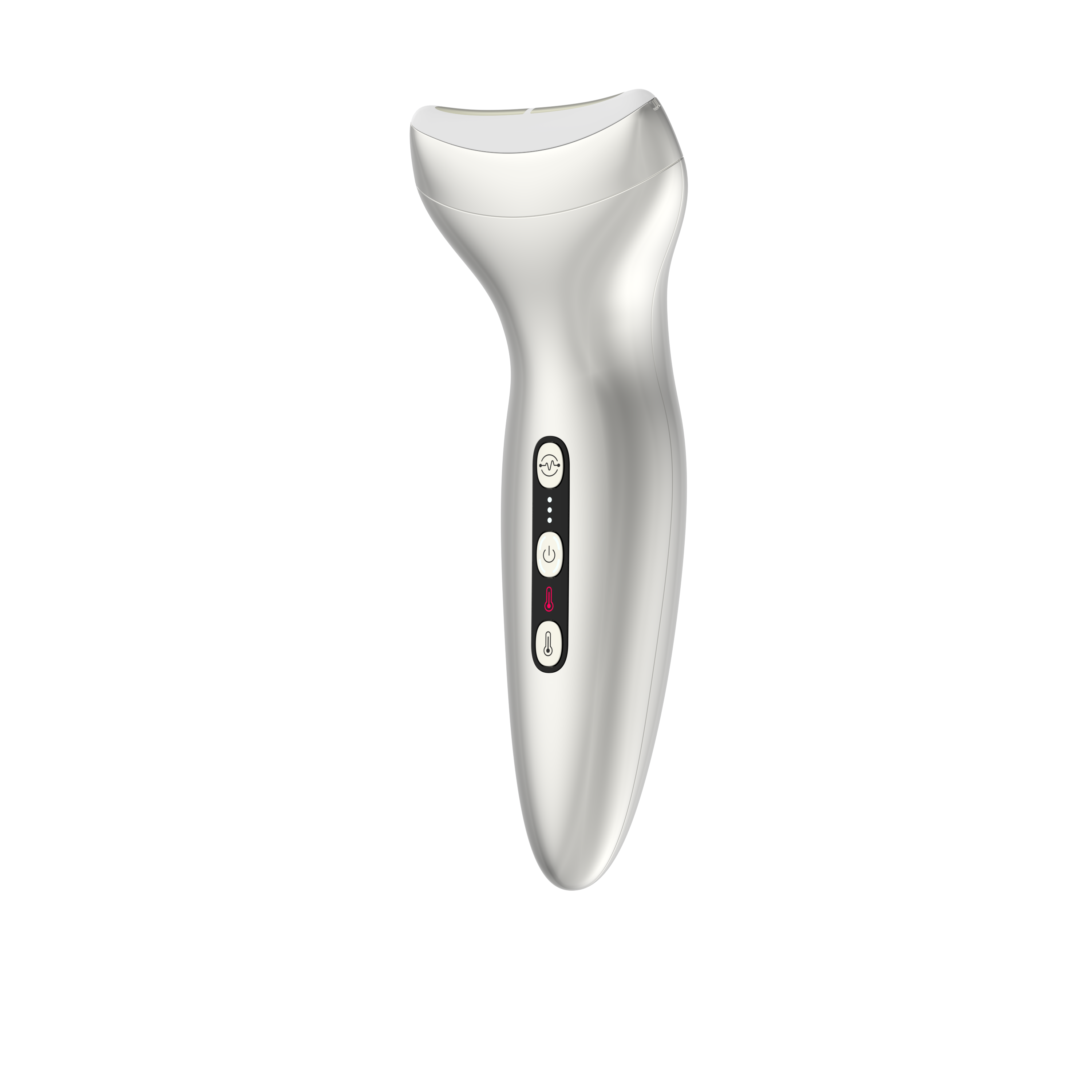
For a private-label launch, choosing beauty equipment is not the same as choosing an item from a wholesale catalog. You are choosing the team that will turn a product idea into a repeatable, market-ready offer under your brand. A low sample price can look attractive, but it tells you very little about batch consistency, documentation, change control, or the support available after goods ship.
From a brand-development perspective, the practical question is not “Which beauty equipment supplier has the most features?” It is “Which beauty equipment supplier can prove that its process fits our category, target market, launch plan, and acceptable risk?” The comparison framework below helps private-label teams assess beauty equipment beauty equipment suppliers without treating a brochure as evidence.
beauty equipment supplier comparisons become unreliable when every factory receives a different request. Before asking for quotations, make a one-page brief covering the product category, intended users, target countries, estimated launch window, expected order range, desired branding changes, packaging requirements, and the documents you expect to review. Include any non-negotiables, such as multilingual manuals, plug configuration, labeling review, or a preferred inspection method.
This does not lock you into a specification. It gives every candidate the same starting point, so differences in their responses are meaningful. A capable beauty equipment beauty equipment supplier should ask clarifying questions rather than simply confirm every request. That is often a useful early signal that its engineering, quality, and commercial teams are connected.
A sample answers a narrow question: can this unit be made to work and look acceptable today? A beauty equipment supplier assessment asks whether the same result can be produced, documented, packed, and supported at scale. Use a weighted scorecard and require evidence for each category.
| Evaluation area | What to request | What a strong response looks like |
|---|---|---|
| Product fit | Relevant category experience, sample configuration, limits of customization | Clear explanation of what is standard, what needs development, and what must be validated. |
| Quality system | Incoming, in-process, and final inspection steps; defect-handling workflow | Named checkpoints, records, and a plan for handling nonconforming units. |
| Compliance readiness | Document list for the target market and responsibility matrix | Specific, bounded answers about available evidence and items the brand must verify separately. |
| Private-label execution | Artwork process, packaging mock-up, manual localization, approval gates | Version control, written sign-off points, and realistic lead-time assumptions. |
| Scale and service | Production planning, spare-parts policy, technical-response process | Capacity discussion tied to your forecast, not an unsupported promise of unlimited output. |
When scoring beauty equipment beauty equipment suppliers, weight the criteria according to your launch risk. A simple cosmetic finish update may place more weight on packaging control. A device with electrical, safety, or market-entry implications should place more weight on documentation, traceability, and testing coordination.
Sample-to-batch consistency is one of the most important checks in private label. Ask how the beauty equipment supplier controls approved materials, component substitutions, cosmetic finish standards, functional checks, and final packaging. Then ask what happens when a defect pattern is found after inspection. You are looking for a process, not a reassurance.
A useful way to test the answer is to separate three questions: What will be inspected? Who records the result? What decision follows if a unit fails? A beauty equipment supplier that can walk through those gates gives your team a better basis for comparing beauty equipment partners. If the explanation stays at “we have strict QC,” ask for the actual inspection stages and the evidence normally shared with customers.
Also compare how each candidate handles approved changes. Private-label projects commonly evolve after a sample review: a logo position shifts, a manual is updated, or a packaging insert changes. Without version control and written approval gates, a small change can lead to mixed materials or outdated instructions in production.
Do not assume that a beauty equipment supplier’s generic statement about certifications automatically covers your product, configuration, claims, destination market, and import model. Requirements can vary by product type and country. A more useful conversation starts with a responsibility map: which documents can the beauty equipment supplier provide, which tests or declarations may be relevant, who reviews labeling and manuals, and which final checks belong to the brand or its qualified advisers?
For beauty equipment, ask candidates to describe their documentation workflow in writing. A useful response distinguishes available factory or component evidence from product-specific records and from approvals that must be handled by the brand, importer, or another responsible party. Avoid treating a logo, a generic document, or an email assurance as legal clearance. Verify the requirements applicable to your intended market before approving bulk production.
Private label is more than adding a logo. Compare the full chain: industrial design limits, color or surface options, logo method, packaging dielines, insert cards, manuals, language review, barcodes, and final artwork approval. Ask each beauty equipment supplier for the files it needs, the formats it accepts, the revision process, and the point at which artwork becomes frozen for production.
A realistic partner will explain trade-offs. For example, a custom housing or new tooling may improve differentiation but require more validation and a longer development path. A faster launch may favor a controlled standard platform with branded packaging. Neither route is automatically better; the right choice depends on your positioning, budget, and tolerance for change after sampling.
Compare quotations line by line: sample charges, tooling or development items, packaging, manuals, spare parts, inspection, payment terms, and shipping assumptions. The lowest unit price can lose its advantage if the beauty equipment supplier cannot explain defect handling, has no spare-parts plan, or treats each artwork revision as an informal exception.
Ask about the minimum order quantity in context. Is it tied to a component, color, packaging material, or assembly run? Can the beauty equipment supplier explain which part of the MOQ is flexible and which is not? That answer is more useful than a headline number because it shows whether the factory understands the operational constraints behind your launch.
Private-label procurement rarely belongs to one person. Product teams care about user fit and differentiation; sourcing teams compare commercial terms; quality and compliance colleagues assess evidence; marketers need packaging and claims to be usable. Bring these perspectives into one scorecard before selecting a beauty equipment beauty equipment supplier.
A practical final review includes the approved sample, the specification and artwork versions, the target-market responsibility map, the inspection plan, the production timeline, and the escalation contacts. If a candidate cannot make these items clear before the order, the uncertainty is unlikely to become easier after production begins.
Choose the beauty equipment supplier whose evidence is strongest for your specific launch—not necessarily the beauty equipment supplier with the longest feature list or the lowest quotation. For an early private-label project, a controlled standard product, disciplined quality gates, and clear customization approvals may reduce risk more than an ambitious design change. For an established brand with a differentiated concept, deeper OEM or ODM capability may justify a longer validation process.
Put simply, compare beauty equipment beauty equipment suppliers on product fit, documented quality control, market-readiness responsibilities, private-label workflow, and ongoing support. Ask the same questions, request the same evidence, and record the answers in a cross-functional scorecard. That approach turns a beauty equipment supplier search into a defensible sourcing decision.

2026/10/30
Discover why in-house mold development helps an RF beauty device manufacturer improve product consistency, iteration speed, tooling control, and production readiness.

2026/10/30
Learn how to verify an RF beauty device manufacturer's R&D and prototyping capabilities using practical engineering workflows and audit checklists.

2026/10/30
Learn what shapes MOQ when choosing an RF beauty device manufacturer and how to plan a lower-risk first order with balanced platform and customization.

2026/10/30
Use this RF beauty device manufacturer evaluation checklist to compare safety evidence, OEM and ODM capability, quality control, and launch readiness.

2026/10/30
See how technology makes beauty at home more guided, consistent, and informed—plus a practical checklist for choosing devices wisely.

2026/10/30
Explore how AI and smart devices shape the future of beauty with responsive routines, clear guidance, trustworthy design, and user-controlled care.

Ideal for daily facial care routines, providing easy-to-use beauty solutions at home.

Perfect for spas and salons’ frequent treatments, enhancing client experiences and results.

Supports dermatologists with advanced devices for professional skin therapy sessions.

Delivers innovative solutions for full-body massage and relaxation with home devices.

Features anti-aging technologies to help reduce wrinkles and stimulate skin vitality.

Specialized devices for safe and effective hair removal suitable for home or clinic use.

Our customers love the Perfect Idea beauty devices. Quality, packaging, and results are all outstanding. We saw increased repeat sales after adding their facial cleansers to our lineup. Their support team is responsive and reliable.

Perfect Idea brings innovation and reliability to home beauty appliances. Our collaboration introduced their massage tools to Japanese women, boosting customer satisfaction and growing our brand trust across the region.

We partnered with Shenzhen Perfect Idea Tech for their beauty equipment. The shipping was fast and every product matched our expectations. Their home-use massagers are especially popular with local salons and home users.

The stylish packaging and attractive design make Perfect Idea stand out. French consumers appreciate the easy instructions and visible results. Communication was efficient and orders always arrived on time.

Perfect Idea home use personal care devices have become a favorite with our clients. The beauty device line offers quality at a reasonable price, and technical training for our staff made onboarding easy.

We selected Perfect Idea for our beauty product portfolio and have seen very positive feedback from our customers. Products are easy to market online and the customer support is reliable and helpful.
